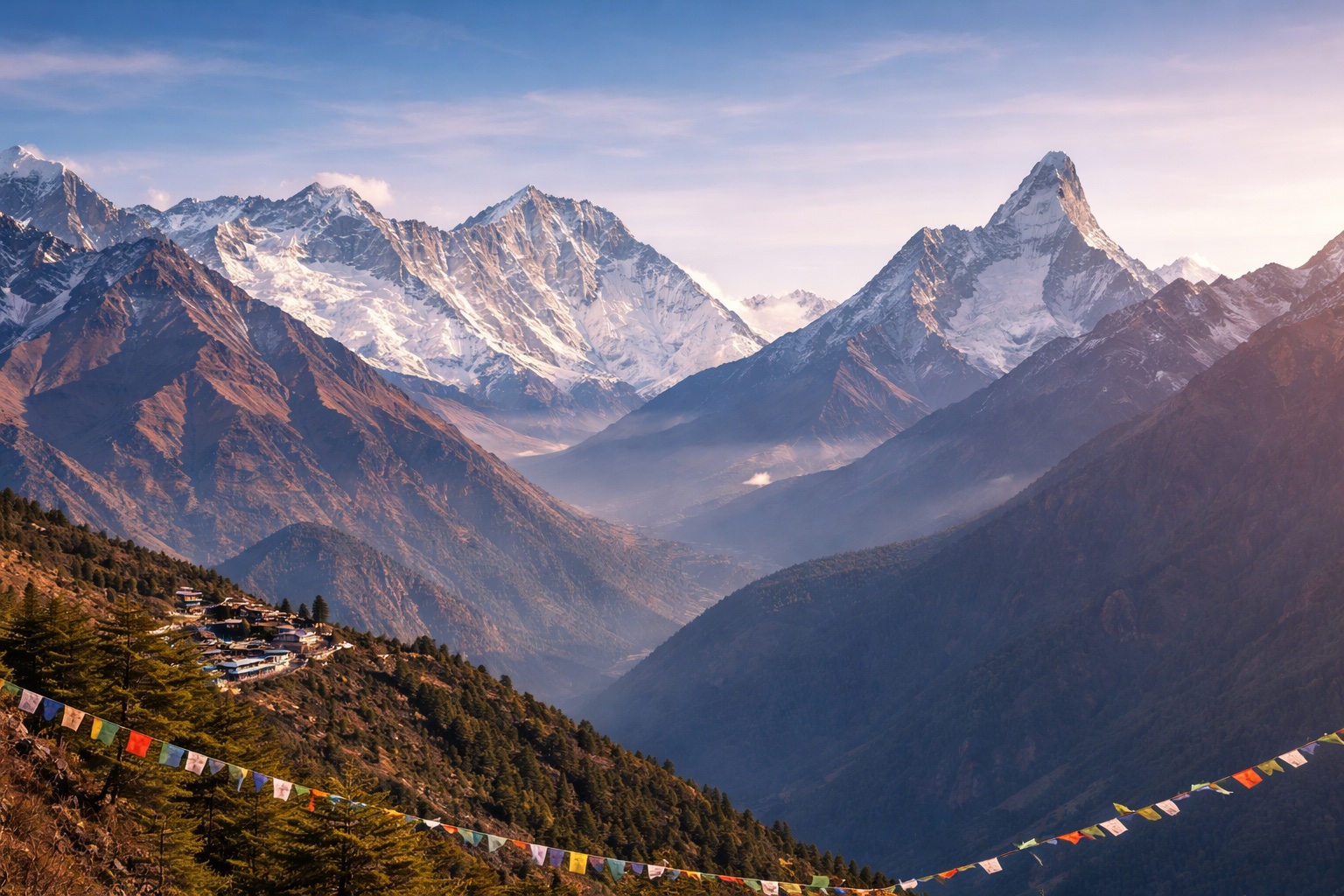
Kanchenjunga is something that is comparatively less talked about in social media and other platforms. So if you are interested in this trekking you must be curious about the accommodation.
Compared to the more popular trekking routes such as Everest or Annapurna, where you could see many tea houses with a menu and coziness, the Kanchenjunga region is more humble. Fewer facilities, geared more toward tradition than toward modernity.
The Kanchenjunga Trek accommodation landscape is defined by its remoteness, offering a raw experience far removed from the more commercialized trails of Nepal. As you traverse the quiet eastern Himalayas, you will find that lodging is basic and organic, yet provides the essential warmth and rest needed for this challenging trek.
Understanding the transition from urban comfort to high-altitude tea houses on Kanchenjunga trek is crucial for any trekker planning to explore this restricted region.
Tea houses quality on the Kanchenjunga Trek
Your experience at the tea houses will greatly depend on how busy the Kanchenjunga trek is. If you avoid the peak season, the facilities would be better. There are fewer trekkers in spring but it can become very busy for a few days at Tseram during the climbing season.
The quality of tea houses in Kanchenjunga also varies depending on your altitude and proximity to major settlements. While lower regions offer modern hotels, the remote mountain areas feature small guesthouses operated by local families that focus on functionality over frills.
- Structure: Most tea houses are simple wooden buildings with rooms separated by thin wooden planks.
- Rooms: Typically, you will find four to five small bedrooms per lodge, each containing two or three twin beds.
- Atmosphere: Every tea house features a central dining hall, which serves as the social heart of the lodge where trekkers gather around a fire to share stories and meals.
- Service: While basic, these lodges provide a warm, welcoming, and friendly atmosphere that reflects the heartfelt hospitality of the local inhabitants.
Accommodation During Kanchenjunga Trekking
For many years, this region was exclusively a camping destination due to its tough geography. However, the recent growth of pre-established lodges has transformed it into a viable tea house trek, making the experience more accessible to international travelers. Despite this development, it remains an off-the-beaten-path destination with far fewer crowds and more limited facilities than the Everest or Annapurna regions.
Hotel and Guest house in Bhadrapur
Bhadrapur serves as a significant urban center and a common starting or ending point for the journey. Because it is a well-developed city, you can find a wide range of accommodation options ranging from standard guest houses to mid-range and upscale hotels.
- Facilities: Rooms here offer modern amenities, including private bathrooms, stable electricity, and internet access.
- Comfort Level: This is one of the few places on the trip where you can enjoy a lavish dinner and high-standard comfort.
- Hot Water: Hot geyser showers are readily available in most city hotels.
Hotel and Guest house in Taplejung
As the official commencement point of the trek, Taplejung offers comfortable lodging that still feels connected to the modern world.
- Room Types: Trekkers can find proper hotels with private bathrooms and comfortable bedding.
- Amenities: Electricity, internet, and hot geyser showers are standard facilities here.
- Important Note: It is highly recommended to eat dinner and breakfast at the same hotel where you stay; otherwise, owners may charge an additional fee of only approximately $10 to the room cost.
Tea Houses after Sekathum and Above
Once you pass Sekathum, the Kanchenjunga Trek accommodation transitions into a more primitive and remote style.
- Sekathum to Amjilosa: Lodges in these areas are simple wooden structures with thin mattresses and shared bathrooms. In Amjilosa, there are two tea houses; one is newly built and quiet, while the other can be noisy due to its location at the end of the village.
- Gyabla and Ghunsa: Gyabla features three hut-like guesthouses. Ghunsa is the largest settlement on the route, boasting around nine tea houses that have made efforts to provide more comfortable rooms and even electric hot showers to cater to trekkers taking acclimatization rest days.
- The Remote High Points (Lhonak and Sele Le): In Lhonak, accommodation consists only of limited, small huts with minimal capacity; often just four double rooms. Sele Le is similarly remote, with only two small huts providing basic shelter against the harsh cold.
- Base Camp Areas: There is a very basic hut at Pangpema (North Base Camp), but many trekkers choose to return to Lhonak for better hygiene. Similarly, in Cheram, there are two teahouses, and most trekkers return here after visiting the South Base Camp rather than staying in the very basic stone-walled rooms at Ramche.
Facilities of Teahouse at Kanchenjunga Trek
When staying in tea houses above Taplejung, trekkers should be prepared for communal living and minimal services.
- Sleeping Arrangements: Rooms are basic with twin beds, a mattress, a bedsheet, a pillow, and a blanket. Because blankets can be scarce at higher altitudes, carrying a high-quality sleeping bag is essential.
- Hygiene and Toilets: Bathrooms are almost exclusively shared and typically consist of Indian-style squat toilets. You will not find private bathrooms once you leave Taplejung.
- Electricity and Charging: Most tea houses use local hydropower or solar panels. There are usually no plugs in the bedrooms; devices must be charged at the reception desk for a fee of $2 to $3 per charge.
- Internet and WiFi: Internet is considered a luxury and is mostly unavailable or extremely slow and unstable above Lelep. Expect to be completely offline for about 15 days of the trek.
- Food Options: Menus are fairly consistent across the trail, focusing on energy-rich local dishes like Dal Bhat (lentil soup and rice), noodles, thukpa, and Tibetan bread. Dal Bhat is the most popular choice as it often comes with unlimited refills.
Accommodation Cost on the Kanchenjunga Trek
The Kanchenjunga trekking cost for lodging is relatively affordable, but prices rise as you ascend due to the difficulty of transporting supplies by porters or mules.
- Daily Budget: A safe estimate for food and a basic room is between USD 25 and USD 35 per day.
- Room Rates:
- Bhadrapur: $15 to $25 per night.
- Taplejung: NPR 500 to NPR 800 (approx. $4 to $7).
- Lower Regions (Chiruwa, Sekathum): NPR 200 to NPR 300 per person.
- Mid-Altitudes (Ghunsa, Yamphudin): NPR 200 to NPR 500.
- High Altitudes (Lhonak, Sele Le, Cheram): NPR 500 to NPR 800.
- Hidden Costs: Be prepared to pay extra for WiFi (2−5), device charging (2-3), and hot water for bucket showers (approx. $3-5).
Electricity on the Kanchenjunga Trek Accomodations
Power along the trail is primarily generated through small-scale local hydropower stations and solar panels, providing enough energy for basic lighting in common areas and most guest rooms. While the lower regions may have more stable power lines, you should not expect to find electrical outlets inside your private room once you venture into the remote sections of the Kanchenjunga Trek accommodation.
Instead, you will need to charge your devices at the reception desk or a central charging station in the dining hall, which typically costs between $2 and $5 (NPR 200–500) per charge.
Because solar energy can be unreliable during cloudy weather or the winter months, carrying a high-capacity power bank and extra camera batteries is highly recommended to ensure you stay powered throughout the trekking. For a seamless experience, bring a two-pin round adapter plug, as the Kanchenjunga trekking cost for energy increases significantly with altitude where resources are more limited.
Internet on the Kanchenjunga Circuit Trek Accommodations
Internet access is considered a significant luxury along this remote route, with reliable, high-speed connections generally limited to urban hubs like Bhadrapur, Taplejung, and Ilam. Once you venture deeper into the circuit, WiFi becomes extremely scarce and is primarily found in lower-altitude settlements such as Ranipul or Lelep; even in these locations, the service is notoriously slow, unstable, and typically requires an additional fee of a few dollars.
While mobile networks like NTC and Ncell provide some coverage in the lower regions, the signal strength decreases/collapses rapidly as you ascend, leaving many high-altitude stops completely without a network. Consequently, trekkers must prepare to be offline for approximately 15 days of the trek, making it essential to coordinate with loved ones beforehand and consider a satellite phone for emergency use.
Showers, Toilets etc on the Kanchenjunga Trek Hotels
Hygiene facilities on the trail undergo a stark transition from the modern amenities of urban centers to the primitive standards of high-altitude lodges. In cities like Bhadrapur, Ilam, and Taplejung, you will find hotels offering private bathrooms and hot geyser showers.
However, post-Taplejung, private facilities vanish, and trekkers must rely on communal bathrooms that feature Indian-style squat toilets. Ghunsa is the most accommodating mountain stop, providing electric hot showers and rare rooms with attached toilets, whereas higher settlements like Khambachen and Cheram generally offer hot water by the bucket for an extra fee.
In the most remote locations such as Lhonak, Pangpema, and Sele Le, traditional indoor plumbing is often non-existent, frequently requiring the use of basic long-drop toilets or outdoor "under the sky" arrangements. Given these conditions, it is essential to carry your own supply of toilet paper, wet wipes, and hand sanitizer to maintain health and hygiene throughout the journey.
FAQs
- Do I need to book accommodation in advance?
While most tea houses do not have online booking systems, it is essential to work with a trekking agency or licensed guide who will arrange your stay. During peak seasons, these limited lodges can fill up quickly.
- Is camping still an option?
Yes, camping treks are still available and preferred by those seeking a more rugged adventure or those planning to climb the peak. You can even combine tea house stays with occasional camping.
- What should I bring in Kanchenjunga trekking to stay comfortable?
A four-season sleeping bag is highly recommended due to freezing temperatures at night and the basic nature of provided blankets. Additionally, bringing a power bank and portable water purification tablets will save you money and ensure your needs are met.
- Can I find Western food during Kanchenjunga treks?
The menu is mostly restricted to local Nepali and Tibetan fare. While some places might offer basic pasta or pancakes, do not expect a wide variety of Western dishes at high altitudes. For the detailed information, read our blog on Foods during Kanchenjunga trekking.
Hidden Trek Nepal IS HERE FOR YOUR SMOOTH TREKKING EXPERIENCE!
Our primary goal is to ensure you have a seamless and worry-free adventure in the remote eastern Himalayas. Because the Kanchenjunga region is officially designated as a restricted area by the government, it is mandatory to hire a licensed guide and trek through an authorized agency.
We take the full logistical burden off your shoulders by handling every detail of your journey, including all prior bookings for accommodations, nutritious meals, and necessary trekking permits. Since many remote tea houses lack online reservation systems and must be booked via direct phone calls, we secure your stay in advance to avoid any issues during peak seasons.
With our team managing everything from transportation to local coordination, you won't have to worry about any prior or on-the-spot bookings, allowing you to focus entirely on the breathtaking landscapes and the raw beauty of the trek.