






.png)
The Ghorepani Poon Hill Hike is a beautiful journey through the heart of the Annapurna region. Hiking seeking solitude from all the nuisance and crowds can consider this hike. It is an easy hike with little to no experience in hiking is required.
The trail winds through rhododendron forests, charming villages of the mountains, and a diverse landscape. You get a chance to interact with the warm locals to understand their mountain lifestyle while staying in tea houses.
Ghorepani Poon Hill Hike is suitable for all age groups, it is a perfect choice for hike who want to experience the Himalayas without going to very high altitudes. The journey to Ghorepani Poon Hill typically starts with a scenic drive from Kathmandu or Pokhara. From there, you begin walking through beautiful small villages. You’ll follow paths that go through dense, green forests, where you might even see colorful birds and some Himalayan animals.
As you ascend, the trail will lead you through charming Gurung and Magar villages. You’ll see traditional stone houses, terraced fields, and perhaps even monasteries.
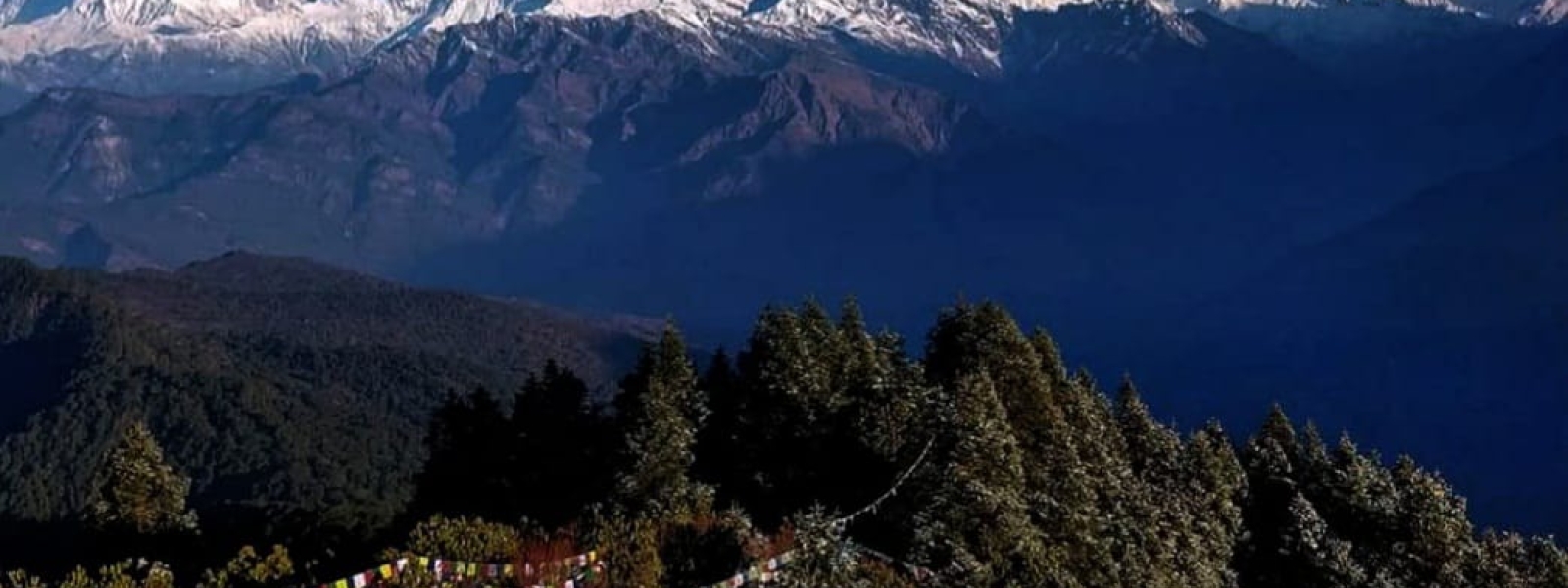
The main highlight of the Ghorepani Poon Hill hike is the early morning ascent to witness the beautiful sunrise at Poon Hill. The sun begins slowly its grand ascent, and its golden rays brush the towering peaks of the Annapurna and Dhaulagiri, Manaslu ranges.
The Ghorepani Poon Hill Hike is more than just a walk; it’s a sweet and memorable experience that blends stunning mountain views, cultural immersion, physical activity, and truly glorious natural beauty. It’s a hike filled with calm and amazing sights.
You’ll take an early morning luxury tourist bus from Kathmandu to Pokhara, a beautiful city of lakes. The dirve offers you best views of the varied Nepali landscape culture and adventure road.
From Pokhara, you’ll then hike a short drive to Nayapoul, a small village and also the official starting point of your hike. The drive will take you to lower hills, offering glimpses of terraced fields and vibrant Nepali homes.
Once you arrive in Nayapoul, you begin your first ascent to Ulleri. The trek to Ulleri is often considered challenging because of its high altitude (2070 m) and stone staircase. Upon reaching Ulleri, you’ll take a well-earned rest and spend a night at your cozy tea house.
You’ll hike from Ulleri to Ghorepani, winding through dense rhododendron and oak forest and charming villages. You’ll pass by waterfalls, beautiful vegetation, and streams. After crossing several streams, you’ll then reach to Nangethani. On the way to Ghorepani, you’ll get panoramic views of Mt. Annapurna, Mt. Fishtail, Mt. Himchuli and many more. You’ll reach Ghorepani in
about an hour or two from Nagethani.
It is a picturesque village offering you scenic views of the snow-capped mountains in Annapurna region. You’ll find many tea houses here, and the atmosphere is lively with fellow hike.
Today is the most anticipated day of the hike! You’ll have an early start, before dawn, as you embark on the final ascent to Poon Hill. This predawn hike is a bit of a climb, but the excitement for the sunrise keeps you going. From Poon hill, you’ll get to witness one of the most mesmerizing sunrise views in the Himalayas. The sun rising over the Annapurnas, Dhaulagiri, Hiunchuli, and Machhapuchhre, is an unforgettable experience.
The vibrant hues paint the scenery with a breathtaking palette of golds, oranges, and deep reds as the sun dips below the Himalayan peaks. After witnessing the magical sunrise of Poon Hill, you’ll descend back to Ghorepani for breakfast. After that, you’ll continue your hike to Tadapani. The trail takes you through more dense rhododendron forests and oak forests. Tadapani promises wonderful closeup views of Annapurna South , Machhapuchre and Hiunchuli.
On your final day, you’ll hike to the large and culturally rich village of Ghandruk. This is a beautiful village inhabited by the Gurung community known for its unique architecture and well-preserved culture. The houses in Ghandruk are typically made of stones. From here, you’ll get your first close up views of Annapurna South and Mt. Fishtail.
From Ghandruk, you’ll then make your way back to either Pokhara or directly to Kathmandu, depending on your onward travel plans. Most of the hikers love to relax few days in Pokhara for few days.
The Poon Hill trek leaves you with lifetime of memories from the majestic Annapurna region.
The Ghorepani Poon Hill Hike stands out for several reasons, making it a popular choice especially for those looking for a taste of the Himalayas without having to spend a long time and excessive preparation. While many treks offer mountain views, the 360-degree panoramic sunrise of surround peaks makes the place iconic! Poon Hill is comparatively short and of moderate difficulty unlike many other Himalayan treks. The trek passes through several villages like Ghandruk and Ulleri, inhabited and preserved by the Gurung communities. The warm hospitality and ever smiling face of the locals makes this trek even better.
Lastly, the Ghorepani Poon hill Hike offers a “best of Nepal” experience in an achievable package: incredible mountain views, cultural immersion, beautiful natural scenery, and a rewarding physical challenge.
Ghorepani Poon Hill Hike trail is a less-challenging area than some other
treks or hiking in the Annapurna region, but you need some regular permits to trek here. Having a licensed guide is strongly suggested for obtaining these permits. Our guide’s expertise ensures your safety and their local knowledge of weather conditions will help you to take the best paths while preventing the potential challenges.
The Ghorepani Poon Hill Hike is located within the vast Annapurna Conservation Area(ACA). The ACA boasts incredible diversity of ecosystems. This impressive variation spans dramatic altitudinal differences, ranging from subtropical forests to high-altitude deserts. The
Annapurna Conservation Area is a habitat for a wide variety of flora and fauna.
flora: In the lower altitudes, you’ll go through lush, dense forests. Various species of Rhododendron, including pink, red, white bloom in Spring. You can also find different pine and oak forests in route. In higher altitudes, you’ll pass through timberline forests and the vegetation becomes more sparse.
Fauna: The ACA is a home to over 105 species of
mammals, including endangered species like the snow leopard, red panda, Himalayan black bear, Lynx, musk deer, and Himalayan thar. The region is also a home to 500+ species of birds, including Himalayan Monal, Kalij, Himalayan Pheasants, Mountain Hawk Eagle and so on.
The region is inhabited by Gurung and Magar communities. Their are renowned for their warm hospitality and welcoming nature. Their houses are made of clay and stones, slate-roofed often perched on hillside with terraced farming. Historically, they used to speak ancient Tibetan language - you’ll see it in prayer flags, chortens and monasteries. Over time, people from
Gurung and Magar communities speak their respective languages. They celebrate Tamu Lhosar (Gurung New Year) and Ghatu.
Drinking water:
Many houses along the hike provide boiled water still, relying solely on bottled water can be very expensive and unfriendly to the environment.
Natural sources like taps and streams are available, but they require purification. So, bring many purification tablets. Hot drinks like Tibetan butter tea, ginger tea and hot lemon are available to keep you warm.
Food:
The Ghorepani Poon Hill trail offers a mix of Nepali, Tibetan and international cuisine. Tea houses along the trek provide basic meals like Dal Bhat consisting of rice, lentil soup and curry. Here’s what you might find for each meal:
Breakfast
Tibetan/Gurung Bread (with honey)
Eggs (boiled, scrambled or fried)
Soup
Pancakes
Roasted potatoes
Lunch and Dinner
Dal Bhat (rice, lentil soup, vegetable curry with some
pickles on the side)
Fried rice
Mo:Mo (steamed Himalayan dumplings)
Thukpa (Tibetan noodle soup)
Drinks
Tibetan butter tea
Ginger Tea with honey
Coffee
Local wine/ rakshi
The climate in the Ghorepani Poon Hill Hike changes a lot depending on the time of year and altitude ranging from lower valleys to high, cold mountain basin. For Spring (March to May): It is a great time to do the hike especially for seeing beautiful Rhododendron flowers. The temperature ranges from 15-25°C on day and can go down from 5-0°C in the night. The sky is generally clear on the day. For Monsoon/Summer (June to August): The weather is rainy and paths are challenging with trails becoming muddy and slippery. The temperature in the ranges from 20 - 25°C on day and 14 to 20°C in the night. The sky is often foggy and cloudy on the day.
For Autumn (September to November): The weather is perfect and this is the most ideal time to visit the base camp. The temperatures range from 15 - 20°C on day and can drop from 5- 0°C,even lower sometimes in the night. The sky is often clear on the day and there are fewer trekkers. For Winter (December to February): The weather is very cold and paths are challenging. The temperatures range from 5 to 10°C on day and -5 to -0°C in the night. The sky is often very clear on the day.
The Ghorepani Poon Hill Hike is an ideal option for hikers enthusiasts in all seasons. While specific seasons like Spring and Autumn are widely considered the best for this hike, the hike is a possible option year round, with each season offering a unique experience - whether it’s the colorful Rhododendron blooms in Spring, lush green landscapes in Summer/ Monsoon, peaceful dry weather in Autumn, or quieter snow-covered views in Winter. The Ghorepani Poon Hill Hike is truly one of the most rewarding choices for hikers regardless of the time of the year with proper preparation.
Your body needs to healthy, so a check-up with your doctor before starting the hike is recommended. Your mind is just as important as physical fitness. A positive attitude, resilience, and patience are key to tackle every challenge. You need to be able to keep going even when things get a bit difficult.
A healthy weight is beneficial for hiking. Carrying extra weight makes the uphill climbs more challenging, so you need to find a healthy balance for your body type.
The valley around the Ghorepani Poon Hill is a world away from fancy hotels so, think of tea houses, not grand lodges.They’re simple and built with local materials; stone and wood. Electricity 24/7 can be difficult so you need to bring your own power bank to charge your phones. The whole hike, you’ll be staying in tea houses and small lodges.
We arrange weekly group hike and our partnered hostels in Kathmandu are popular with trekkers for meeting others who are also travelling alone. They are the perfect places for you to find a group to go with making it super simple and easy for solo travelers.
Solo Hiking to Ghorepani Poon Hill is possible and can be an useful experience. While solo trekking offers personal growth, it also comes with challenges that require extremely careful planning. As solo hikers have no immediate help in case of emergencies such as injuries, altitude sickness, and unpredictable weather conditions, group hikes are generally recommended. A proper licensed guide can help you with navigation, unexpected weather changes, and medical emergencies.
Annapurna Conservation Area Project(ACAP)
- For foreign nationals: NPR 3000 per person (approximately $30)
- For SAARC nationals: NPR 1000 per person
- For Nepali citizens: NPR 100 per person
Original Passport with validity for at least 6 months
A photocopy of your passport
Passport- sized photographs(1-3)
Agency Documents (this will be provided by the
agency itself)
Packing list will be depend on the season time and hikers comforts,
For your feet and legs
Reliable hiking boots,
Warm and comfy socks for cold nights
Thermal pants that are lightweight and comfortable
For your body:
Thermal tops
Pancho
Down jacket
Waterproof and windproof outer layers
Warm hat and gloves for higher altitudes
First-Aid-Kit
Include essentials like bandages, antiseptic, pain killers
and your personal medications
For your skin:
Sunscreen, sunglasses, moisturizer, cold cream and a hat
to protect your skin and eyes, reusable water bottles
and water purification tablets
Wet wipes and biodegradable soaps
Granola bars and other high energy food
Sleeping Bag
Torch/Headlamp
Power Bank
The typical duration for the Poon Hill Hike ranges from 3-6 days depending on your starting point, itinerary, routes, and pace. However, it is to be noted that days cannot be customized according to your preferences.
The Poon Hill Hike is one of the easier and slow paced hike in the Himalayas. You’ll be hiking uphill for several days in a row in high altitudes, so your heart and lungs should be able to handle continuous physical activity.
While not strictly mandatory, hiring a guide is strongly recommended to avoid challenges such as injuries, unexpected weather changes, and navigation. Our hiking guides are experts in mountaineering with a deep understanding of local cultures and people. They assist you in every trek to make memories that you’ll treasure for life.
We arrange basic tea houses offering simple rooms, often with twin beds, and bathrooms while providing you with comfort. Keep in mind, this is supposed to be a humbling experience not a luxury one, so expect basic facilities especially in higher altitudes.
Most tea houses and lodges in lower altitudes like Ghorepani offer Wi-Fi with charging facilities but you need power banks for a small charge in higher altitudes.
Yes, our guides are fluent in English and capable of proper communication, but kindly bear in mind their non-native background may lead to some minorgrammatical mistakes.
No, Trekkers no longer require to purchase a Trekkers’ Information Management System (TIMS) card is for the Poon Hill Hike and other Annapurna regions.
The highest altitude of the trekking journey is approximately 3,210 meters.
Unlike other high altitude hike like the KanchenjungaCircuit, Poon Hill is comparatively safer. While it is generally considered safe, it comes with some natural risks that trekkers need to be aware of: Altitude Sickness (the maximum altitude is at 3,210 m) Avalanches and Landslides (especially during Monsoon) Unpredictable Weather(in the Himalayas).
While you don’t necessarily need to be an experienced mountaineer, you must be fit and prepare accordingly to make the Poon Hill Hike more enjoyable and successful. The hike is considered moderate in difficulty,meaning it’s manageable for beginners with reasonable level of fitness.
Hidden Trek Nepal is the best company to organize Poon Hill Hike with the group. Contact us for more details.
Contact Us
Address: Hidden Trek Nepal, Thamel, Kathmandu
Email: info@hiddentreknepal.com
+977-9840354791 What'sApp
Hidden trek Nepal takes care of all your travel necessities and provides you with authentic local experience while walking hand-in-hand with our local experienced guides who’ve spent all their lives in the mountains.
You can easily get a group at Hidden Trek Nepal, because they are runnihg couple of hostel in Kathmanu and they make a group every 2 or 3 days.
Yes, you can also organize Poon Hill Hike from pokhara, you just need to share your hostel or hotel location and our guide will come to pick you up or a day earli you can meet your group.
Yes, you can join the group to Poon Hill Hike even though you are beginner. It;s an easy hike for 3-6 days.