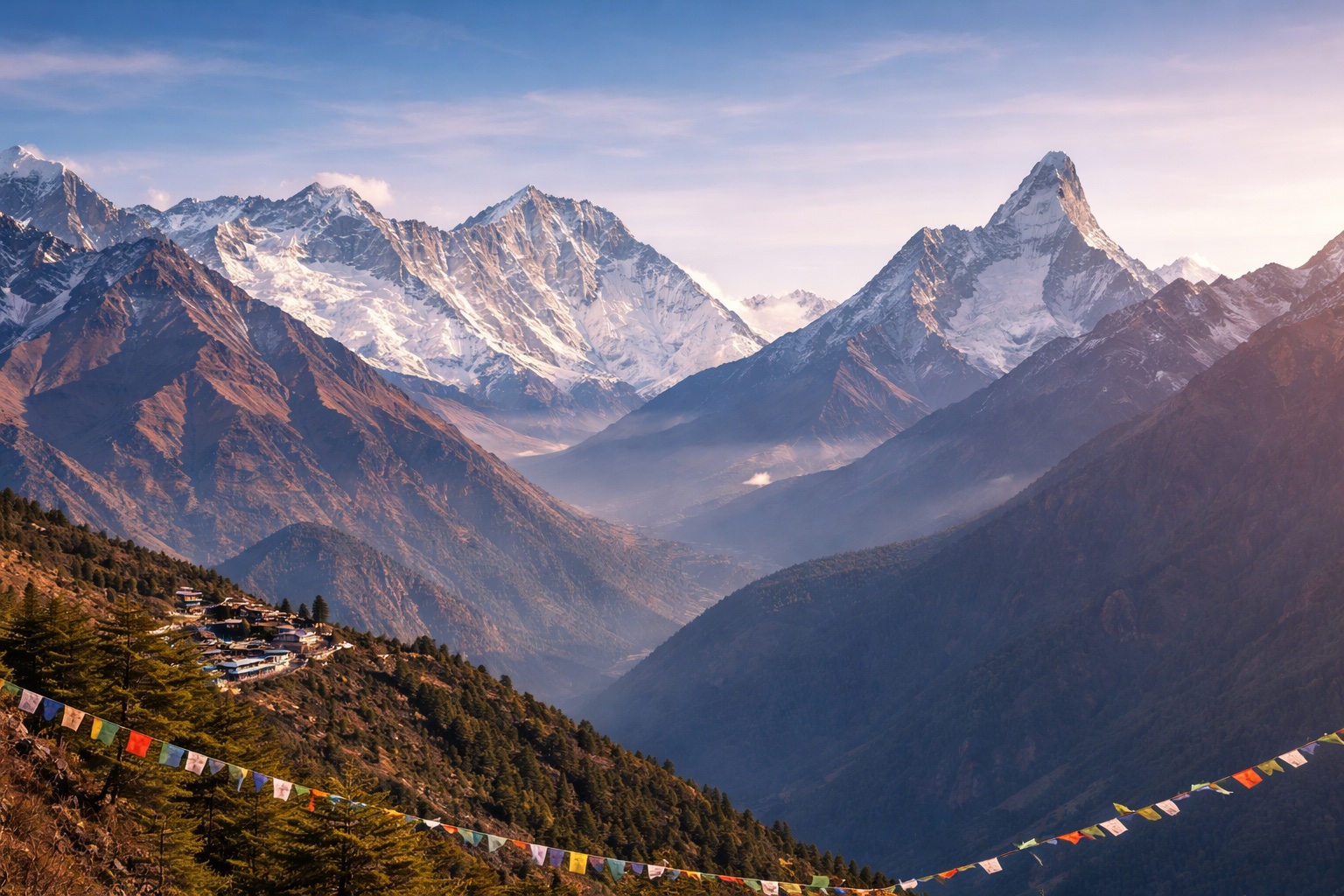
Standing at 8,586 meters, Mount Kanchenjunga is the world’s third-highest mountain and the crowning jewel of Nepal's wild eastern border. Kanchenjunga is an ideal destination for those who wish to explore the Nepal Himalayas and encounter overcrowding in Annapurna and Everest. Recently, Annapurna and Everest have been heavily commercialized, making them a top priority for travelers who prefer luxury treks.
On the other hand, Kanchenjunga follows unspoiled and natural pathways, passing through settlements that evoke a genuine Himalayan experience.
In this comprehensive guide, we provide everything to know about Kanchenjunga Region Trek, from the sacred legends of its peaks to the logistical details required for your successful 2026/2027 expedition.
About Kanchenjunga
Mount Kanchenjunga is located in the far northeastern corner of Nepal within the Taplejung District, sitting along the border with Sikkim, India, and Tibet. The destination is known for massive glaciers, deep rugged valleys, and five distinct peaks of Kanchenjunga that dominate the skyline.
Due to the isolation, the area wasn't open to visitors until the mid-1980s. This helped protect its natural ecosystems and traditional mountain cultures. The area is now open for the adventure enthusiast and protected by the Kanchenjunga National Park (Conservation Area), which is 2,035 square kilometres of some of the world's most biologically diverse land.
Wild East of Nepal: Why Kanchenjunga Region Trekking?
The Kanchenjunga trail is still one of the least travelled paths in Nepal, even though a lot of people visit the Khumbu or Annapurna areas. We choose this trek as the highlighted trekking in Nepal because it has very few other trekkers and makes us feel like we are really exploring.
The Legend of the "Five Treasures of Snow"
The name Kanchenjunga is derived from the Tibetan words Kang-Chhen-Dzo-Nga, which translate to the "Five Treasures of Snow". The five treasures indicate the five peaks of the Kanchenjunga massif that remain covered with snow.
The five peaks of Kanchenjunga are: Kanchenjunga Main, Kanchenjunga West (Yalung Kang), Kanchenjunga Central, Kanchenjunga South, and Kangbachen. Local folklore suggests each of the five summits represents a divine storehouse of God: gold, medicine, gems, grain, and holy books.
Because the mountain is respected as a deity, climbers typically stop just short of the summit in respect, leaving the highest point alone.
Beyond Everest and Annapurna
As mentioned earlier, for adventurers seeking an alternative trek of Everest and Annapurna, this region offers a rare glimpse into the Himalayas as they were decades ago: raw, remote, and remarkably quiet.
If you find both regions too commercialized, Kanchenjunga mountain peak trekking is for you. Here, you won't find luxury lodges or crowded trails. Instead, you experience:
- Pristine Wilderness: Home to the red panda, snow leopard, and over 250 bird species. As the area becomes less commercialized, the more wilderness it will offer.
- Cultural Tapestry: Authentic interactions with Limbu, Rai, Sherpa, and Tibetan-influenced communities.
- Solitude: The sound of rushing rivers and wind through prayer flags replaces the noise of busy tourist hubs.
However, trekkers have basic accommodations, food, and other services. This makes the trek harder, and many thrill seekers find it totally rewarding. Some also prefer to increase the difficulty by camping instead of staying in a tea house.
Which Trek Route: Kanchenjunga North vs. South Base Camp
When selecting your Kanchenjunga trek, there are three main factors to consider: shorter options, the whole circuit, and other specifics.
The Full Kanchenjunga Circuit: Connecting Both Base Camps
Duration: 18-24 Days
Walking time per day: 5-7 hours
Difficulty: Extraneous
Accommodation: Basic tea houses
Highest altitude: 5,140 m
This is the ultimate Himalayan adventure, circling the entire massif and covering both major base camps. Kanchenjunga Circuit Trek is longer, extreme, and therefore, more challenging than the rest of the two treks.
The Mount Kanchenjunga Circuit Trek combines both North and South Base Camps into one tremendous journey. The Kanchenjunga Circuit Trek North to South provides breathtaking views of the mountains. Makalu, Kanchenjunga, Everest, and Lhotse are four of the world's five highest summits, in addition to the other mountains in the Kanchenjunga range.
Kanchenjunga Circuit Trek Itinerary
Day 1: Kathmandu to Bhadrapur (Flight) to Taplejung (Drive)
Day 2: Taplejung to Sekathum (Off-Road Drive)
Day 3: Sekathum to Amjilosa (Trek)
Day 4: Amjilosa to Gyabla (Trek)
Day 5: Gyabla to Ghunsa (Trek)
Day 6: Ghunsa to Khambachen (Trek)
Day 7: Khambachen Acclimation day (Hike to Janu Base Camp / Kumbhakarama Base Camp)
Day 8: Khambachen to Lhonak (Trek)
Day 9: Lhonak to Kanchenjunga North Base Camp ( Pang Pema ) back to Lhonak (Trek)
Day 10: Lonak to Ghunsa (Trek)
Day 11: Ghunsa to Selele Base Camp (Trek)
Day 12: Selele Base Camp to Cheram via Selele Pass and Mirgin La Pass (Trek)
Day 13: Cheram to Ramchaur (Ramche) (Trek)
Day 14: Ramchaur to South Base Camp and trek down Cheram (Trek)
Day 15: Cheram to Tortong (Trek)
Day 16: Tortong to Yamphudin (Trek)
Day 17: Yamphudin to Phikkal (Drive)
Day 18: Phikkal to Bhadrapur (Drive) and fly to Kathmandu (Flight)
North Base Camp (Pangpema): The Most Iconic Himalayan Vistas
Duration: 14-18 Days
Walking time per day: 5-7 hours
Difficulty: Hard
Accommodation: Basic tea houses
Highest altitude: 5,140 m
The North route leads through the Ghunsa Valley and offers the most dramatic views of Kanchenjunga’s massive north face. The trek is more lengthy and challenging than the south side.
Kanchenjunga North Base Camp passes through unforgettable natural beauty stops like Sekathum, Amjilosa, Gyabla, and Ghunsa, blending with cultural beauty. The trek typically begins in Taplejung.
Kanchenjunga North Base Camp Trek Itinerary
Day 1: Kathmandu to Bhadrapur Flight & Drive to Taplejung (1,820m)
Day 2: Off-Road Drive to Sekathum (1,650m)
Day 3: Trek to Amjilosa
Day 4: Trek to Gyabla
Day 5: Trek to Ghunsa
Day 6: Trek to Khambachen
Day 7: Acclimatization Day in Khambachen
Day 8: Trek to Lhonak
Day 9: Hike to Kanchenjunga North Base Camp (Pang Pema – 5,140m) & Return to Lhonak
Day 10: Descend to Ghunsa
Day 11: Trek to Amjilosa
Day 12: Trek to Sekathum & Drive to Taplejung
Day 13: Drive from Taplejung to Phikkal
Day 14: Drive to Bhadrapur & Fly to Kathmandu
South Base Camp (Oktang): A Shorter Yet Rewarding Alternative
Duration: 10-14 Days
Walking time per day: 5-7 hours
Difficulty: Challenging
Accommodation: Basic tea houses
Highest altitude: 4,741 m
The South route takes you through the Yalung Valley, featuring lush forests and views of the Yalung Glacier. The South Kanchenjunga base camp trek is moderately challenging, with less trekking days in comparison to North Base Camp and a balanced altitude gain.
Kanchenjunga South Base Camp passes through unforgettable natural beauty stops like Yasang, Tortong, and Cheram. The last destinations push you toward Ramche and Oktang Viewpoint, revealing the southern face of Kanchenjunga.
Kanchenjunga South Base Camp Trek Itinerary
Day 1: Kathmandu to Bhadrapur by (Flight) to Taplejung (Drive) (1820m/ 5,842ft, 8-9 hours)
Day 2: Taplejung to Yamphudin (1692m/ 5,496ft, 7-8 hour off-road drive)
Day 3: Yamphudin to Tortong ( 2980m/ 9565ft 7-8 hours)
Day 4: Tortong to Cheram ( 3868m/ 12416ft 5-6 hours)
Day 5: Cheram to Ramchaur ( 4610M/ 14798ft 3-4hr)
Day 6: Ramchaur to South Base Camp ( 4741m/ 15215ft) and trek down Cheram ( 3868m/ 12416ft, 5-6 hours)
Day 7: Cheram to Tortong ( 2980m/ 9565ft, 4-5 hours)
Day 8: Tortong to Yamphudin ( 1692m/ 5431ft, 5-6 hours)
Day 9: Yamphudin to Phikkal Drive ( 8-9 hours)
Day 10: Phikkal to Bhadrapur and fly to Kathmandu ( 5-6 hours)
Which Trek Should I Choose?
This is entirely dependent on your level of interest, physical strength, and length of stay in Nepal.
Choose the Circuit if you have the time and fitness to complete the entire loop. Choose the North Base Camp for breathtaking mountain views and Sherpa culture, or the South Base Camp for a shorter route that values Limbu and Rai cultural immersion.
Planning & Logistics
Best Time for Kanchenjunga Trek
The most appropriate months for the Kanchenjunga region trekking are September, October and November (Autumn); Spring, March to May. These seasons provide good weather; sunshine and mild temperatures suitable for trekking.
Spring also includes magnificent flowers, notably rhododendrons, which adds beauty to the designs; autumn has wonderful colors of leaves against mountainous backgrounds.
Trekking at these busy times will provide you with pleasant weather and the opportunity to participate in some of the local cultural events hosted by several settlements along the trail.
Packing List for Kanchenjunga Trekking
Body
- Base layers (thermal shirts and bottoms) (Merino Wool)
- Insulated down jacket or fleece
- Outer layer that is both windproof and waterproof (hiking jacket)
- Quick-drying hiking trousers
- Waterproof Pants
- Beanie or headwear that is warm
- Long sleeve t-shirts
- Neck gaiter or buff
- UV-protective sunglasses
- Sunscreen with a high SPF
- Lip balms with SPF
Footwear
- Durable waterproof trekking boots
- Hiking Sandals
- Thick hiking socks (Merino Wool or Synthetic)
- Sock Liners
Hands
- Winter hiking gloves
- Slim Liner Gloves
Backpack and Accessories
- A Beast of a Backpack (50-70 L), and Hiking Daypacks
- Trekking poles (2 suggested)
- Hydration Pack or Water Bottles
Kanchenjunga Trek Permits
The Kanchenjunga region trek is one of the most restricted areas in Nepal, requiring two types of Kanchenjunga permits.
- Kanchenjunga Restricted Area Permit (RAP)
- Kanchenjunga Conservation Area Project (KCAP)
The Kanchenjunga Region has four Village Development Committees (VDCs), namely Yamphuding, Lelep, Paping, and Olangchung Gola in the Taplejung District wards, which the Nepalese government has designated as restricted zones.
As a result, travelers on this trekking must get a Kanchenjunga Restricted Area Permit (RAP) in order to enter these zones. This serves to govern tourism, protect flora and species, and prevent illicit activity in the area.
Along with that, The Kanchenjunga Conservation Area Project (KCAP) permit supports the growth and protection of the Kanchenjunga region, which covers 2,035 square kilometers.
The restricted region was established to preserve the Kanchenjunga region's significant history. Once you have the permit, you must walk along the specified or designated path and follow the guidelines of the officials.
How to Get to the Kanchenjunga Treks
The gateway to the region is Taplejung.
- Flight/Drive: The most reliable way is a 45-minute flight from Kathmandu to Bhadrapur, followed by a 10-hour drive to Taplejung.
- Direct Flight: Flights to Suketar (Taplejung) exist but are often canceled due to mountain weather.
- Road: A direct bus from Kathmandu to Taplejung is possible but takes over 24 hours.
How Difficult is Kanchenjunga Trek? Realistic Expectations
This is not a trek for beginners; it demands physical and mental endurance.
Reviewing Difficulty Gradings:
- Moderate Routes (South Base Camp): While "moderate," it still involves daily 6-hour walks and reaching 4,800m.
- Challenging Routes (North Base Camp): Involves high-altitude desert terrain and sustained time above 4,000m.
- Extraneous Route (Circuit Trek): The hardest option, crossing multiple 4,000m+ passes and requiring 3 weeks of consecutive effort.
Key Factors of Difficulty:
- Physical Demands: Requires intense cardio and strength training. We recommend a 12-week preparation plan including squats, lunges, and hiking with a weighted pack.
- Mental Aspects: You must be prepared for isolation, basic food (dal bhat on repeat), and resilience against unpredictable weather.
- Age Suitability: Generally 18+ with excellent health. Older trekkers can succeed with a tailored, slower pace and extra acclimatization days.
FAQs
Q1: Can I trek Kanchenjunga solo?
A: No. Government laws mandate a licensed guide and at least two trekkers for restricted area permits.
Q2: How much does the trek cost?
A: All-inclusive packages typically range from $2,500 to $5,500 USD depending on duration and service level.
Q3: What are the chances of seeing wildlife?
A: The region is a biodiversity hotspot. While rare, sightings of red pandas and blue sheep are possible within the Kanchenjunga National Park.