





.png)
Annapurna Base Camp Trek is a famous trekking into the heart of the Himalayas, combining nature and cultural experience. This 9-days package is designed in a way, merging two of the most iconic adventures of the Annapurna Region. Along with taking you to the base of the 10th tallest peak of the world (Annapurna I), this package also takes you to Ghorepani Poon Hill.
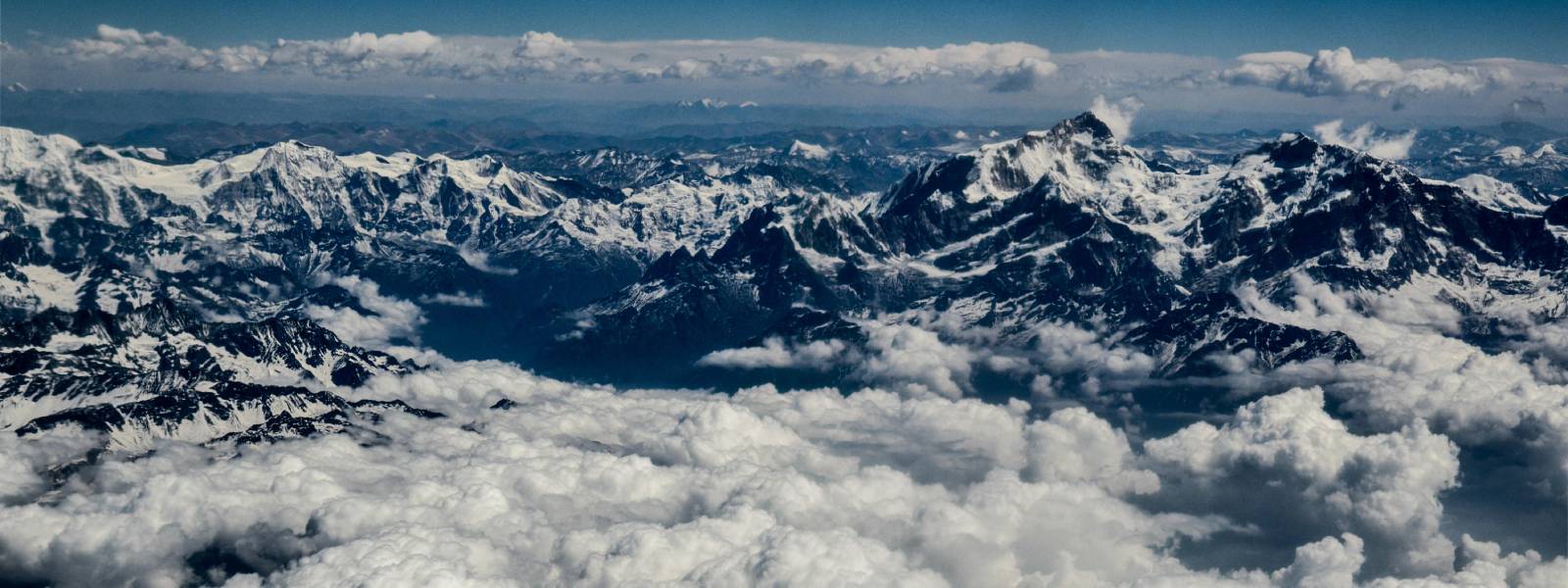
The breathtaking landscapes transition from forests and farming villages to glacial beauty. The base camp is surrounded by a 360-degree panorama of snow-capped mountains, including Machhapuchhre (Fishtail), Hiunchuli, and the vast Annapurna massif.
This trek is considered moderate in difficulty, which is also achievable for first-time trekkers with good fitness. With Hidden Trek Nepal, you get guidance from a local expert, focussing on gradual acclimatization, and the warm hospitality of Gurung and Magar villages.
Annapurna is a mountain range located in north-central Nepal, part of the larger Himalayan massif. The name itself is derived from Sanskrit, where "Anna" means food and "Purna" means filled, often translated as "Goddess of the Harvests" or "The Provider" (General Knowledge). Annapurna range is home to 1 peak over 8,000 meters, 13 peaks over 7,000 meters, and 16 more over 6,000 meters.
The centerpiece of the range is Annapurna I (8,091m), the 10th highest mountain on Earth. Other peaks you will encounter during the trek include Annapurna South (7,219m), Annapurna II (7,937m), Annapurna III (7,555m), and Annapurna IV (7,525m). You will also encounter Mt. Machhapuchhre (6,993m), known as "Fishtail" due to its twin-peaked summit. The peak is considered a sacred mountain and remains unclimbed.
A day on the trail with Hidden Trek Nepal is thoroughly customised in order to maximize your safety, and connection with the Himalayas. Mornings often start between 6:00 AM and 7:00 AM early in the morning. One of the main reasons to start early is to take advantage of the clearest mountain views and stable weather.
After a hearty breakfast at your teahouse you stayed at last night, we begin the trek. The trek usually takes approx 5-8 hours of walking, depending on the destination. The whole trail involves steady climbing, frequent hydration stops, and a mid-day break for lunch.
By late afternoon, we reach our destination where we stay overnight. Evenings during the trekking are for sole relaxation in the communal dining hall. The hall is usually warmed by a central wood stove. Here, our guide will conduct a briefing for the next day, discussing the route and safety precautions. Dinner is served early, around 6-7 PM in the night time.
After dinner, it provides you a chance to bond with fellow trekkers before retiring for a well-earned rest.
The 9-day ABC is classified as Moderate (Grade B) trek which does not require technical climbing skills or previous mountaineering experience. However, the trek does demand reasonable cardiovascular fitness and physical stamina. You need to prepare your body for approximately 110 - 130 kilometers, which is a 6-8 hours of walk everyday.
The challenges you will face are steep ascents and descents, especially the stairs at Ulleri and the high altitude. The trek reaches up to 4,100 meters and as you climb above 3,000 meters, the air becomes thinner and oxygen levels drop. Such an environment can make even simple walking feel strenuous and may raise your breathing.
Our 9-day itinerary provides a gradual acclimatization, following the "climb high, and sleep low" principle before reaching toward the highest point of the trek (4,130m).
We recommend you start a focused cardio exercise (running, cycling) and strength training for at least 1-2 months before you arrive for the trekking. These exercises will help you with the core and leg, making you stronger for the trek. Hiking with a weighted backpack will also help you to enhance your comfort on the trail.
In order to enter the protected area of Annapurna region, we need two main entry cards:
Note: You must take your permit card with you at several checkpoints along the route. The most important place you need to have it is at Birethanti, the start of the trek. Hidden Trek Nepal handles all the paperwork for you, and makes your permits ready even before you step on the trail.
Day 01: Drive Pokhara to Nayapul and trek to Tikhedhunga
Day 02: Trek Tikhedhunga to Ghorepani
Day 03: Early morning hike to Poon Hill (viewpoint) and trek to Tadapani
Day 04: Trek Tadapani to Chhomrong
Day 05: Trek Chhomrong to Himalaya
Day 06: Trek Himalaya to Annapurna Base Camp (via Machhapuchhre Base Camp)
Day 07: Trek ABC to Bamboo
Day 08: Trek Bamboo to Jhinu Danda (hot spring)
Day 09: Trek Jhinu Danda to Nayapul, then drive back to Pokhara
Your adventure begins with a bumpy 1.5 hours drive from Pokhara to Nayapul. We will finalize permits here, meet the crew and set off along the banks of the Modi Khola.
The first day is a short introduction to the region and the trail which includes a short walk. The trail features a gentle route with the valleys and terraced fields. We pass through the busy village settlement of Birethanti, and cross suspension bridges. We arrive at Tikhedhunga via Hile, and stay in a cozy teahouse for the night.
This day you will catch the trekking rhythm along with enjoying the greenery of the lower Annapurna region
Today the trail introduces the first major physical challenge to you, 3,200 stone steps of Ulleri. This steep ascent will test your stamina for a while, however, later the trail becomes quite easier as you enter deep rhododendron and oak forests.
You will already start getting the first mesmerizing views of Annapurna South and Hiunchuli. We stop for lunch at a favorable place (possibly Banthati) and continue with the steady climb through the woods. Thundering waterfalls and chirping birds start to accompany you from this trail.
After a while we reach Ghorepani, a beautiful village as an important gateway to the Sanctuary. The sunset views from your teahouse window during the clear weather is something you will remember for life
We wake at 4:00 AM for an early morning hike to the summit of Poon Hill (3,210m). It takes around an hour to reach the viewpoint. The tiredness collapses as you witness one of most incredible sunrises on Earth. During the best weathers, the sky turns pink and gold, the Dhaulagiri and Annapurna masses glow with breathtaking clarity.
We descend back to our hotel, enjoy the warm breakfast and trek toward Tadapani. The route takes you through Deurali Pass (3,090m), along with dense forests where you might spot Gray Langur monkeys. Shortly, we reach Tadapani and spend our overnight enjoying some of the closest views of Machhapuchhre you’ve seen yet.
Today, the trail presents you a mix of steep descents and rewarding climbs. One thing about this route is it isn’t like almost every trekking route in Nepal (ascend to reach and all descend while returning). Annapurna base camp route is a mixture of ascend and descend, both while reaching and returning.
However, we leave Tadapani and descend through rhododendron and oak forests toward the Kimrong Khola River. After a while, we cross a suspension bridge, this is where you begin a two-hour uphill ascent to reach Chhomrong village.
Chhomrong is one of the largest Gurung settlements in the high altitude valley. The village hangs on a hillside with stone-paved lanes to reach its beautiful traditional houses. You have one of the closest views of Annapurna South and the sacred Fishtail peak from this place. We may also visit the local Gurung Museum which has preserved its history of the legendary Gurkha soldiers who belong to these villages.
We leave Chhomrong by descending 2,500 stone steps and reach Chhomrong Khola River before climbing steeply up to Sinuwa. Today is one of the most physically demanding days, involving multiple uphill and downhill.
However, the best part is we officially enter the Annapurna Sanctuary today. The valley narrows down from here, and the trail passes through dense bamboo and rhododendron forests.
After some walking, we reach the small settlement of Bamboo, followed by the ascent toward Dovan and finally reach Himalaya. Now you will softly realise the transition of the trail from jungle to more rugged alpine terrain.
Today will be the most thrilling day, as you can most altitude today, also trek through areas known for avalanche debris (depending on the season).
We trek through Hinku Cave and eventually reach Machhapuchhre Base Camp after about 2-3 hours of trek through the cave. We may stop here for a long lunch, and enjoy a view surrounded by a 360-degree view of peaks including Gangapurna and Tent Peak.
We stretch our bodies for the last time to reach Annapurna Base Camp. From here, the trek is gentle, and we reach over an hour with a gradual ascent. Standing at the foot of Annapurna I (8,091m), surrounded by the Annapurna Glacier, is a moment of spiritual fulfillment you will never forget.
We wake up early to witness a spectacular Himalayan sunrise, with the mountains glowing in the morning light. After you take your time breathing in your dream destination, we begin our descent.
We take the same route while returning from the trek, revealing new vistas of the valley. The descent will be rapid as we drop nearly 1,700 meters this day. This can be a long and tiring day for your knees, as we pass through MBC, Deurali, and Dovan, eventually reaching the sanctuary of the Bamboo forests.
We will complete the trail on the same day which we took multiple days to reach. It was important while ascending to acclimatize your body in the high altitude. During the descent, the thicker air at this lower altitude makes up with a restful night of sleep.
The trek again takes us back through Sinuwa and then involves the climb back up to the challenging stone steps to Chhomrong. After a lunch with final panoramic views of the high peaks, we again begin a very steep descent toward Jhinu Danda.
We reach Jhinu, which is built on a ridge. The main highlight of Jhinu Danda lies 15-20 minutes downhill beside the Modi Khola River. The natural hot spring, which is believed to have healing properties. You soak in the hot spring and rejuvenate your sore muscles after eight days of trekking. The hot spring consists of mineral-rich thermal waters.
We follow a gentle trail along the banks of the Modi Khola, through rice paddies, green hills, suspension bridges and small villages. From Nayapul, our pre-arranged private vehicle picks you up for the 1.5 to 2-hour drive back to Pokhara. Back in Pokhara, you can visit Phewa Lake, enjoy a cozy dinner, and remember your accomplishment to the heart of the Annapurna Himalayas.
Annapurna region goes through four different seasons, each offering a unique trekking environment:
Spring (March to May) is one of the most popular seasons for trekking. The weather during this season remains stable, temperatures are moderate, and the rhododendron forests are in full bloom. Clear mornings during this season will offer sharp mountain views.
Autumn (September to November) is popularly known as the premier trekking season, autumn season offers the absolute best mountain visibility and crisp. The monsoon rain cleans away all the dirt and offers you the best view.
Winter (December to February) season is for those travelers who are seeking solitude. The trails during winter season are quiet where you will find very low travellers. The mountains will be covered by snow, providing the crystal white peaks. However, it is very cold (dropping to -15°C at ABC), and some high-altitude teahouses may close due to heavy snow.
The trail during the Summer/Monsoon (June to August) season experiences heavy rainfall, leeches on lower trails, and potential landslides. While the landscape is incredibly green due to washed forests, the mountain views are often hidden by clouds.
Acute Mountain Sickness (AMS) is a risky factor once you reach 3,000 meters and above. This affects much of the latter half of the ABC trek. By saying that, AMS is not something everyone will get, it is caused by the inability of the body to adapt quickly to lower oxygen levels.
On every major himalayan trail like Annapurna Base Camp, you might come across narrow paths, unpredictable climate changes, or thin air that leaves you feeling exhausted and light-headed.
The most important thing to keep in mind is to keep your body fit before you start the trek. Cardiovascular workouts prior to 3-4 months before the trek will help a lot during your trek, making you both physically and mentally ready. We also highly recommend you to go on multiple hikes, and be involved in strength building.
However, staying safe isn’t just about preparing in advance; it’s also mainly about staying alert, being cautious, and trekking wisely every single day. This confidence comes with a lot of preparation before your trek. You also need to listen to your guide and keep him updated about your physical condition from time to time during the trek.
Accommodation during the trail is primarily in locally-run teahouses (mountain lodges).
Teahouse menus offer both local Nepalese and international cuisines.
.
Our transportation service starts from Pokhara to the starting point of the trek i.e. Nayapul.
You need to struggle a little during the high altitude areas.
To schedule your customized Annapurna Base Camp trek, it is best to hire the services of a well-known trekking company in Nepal, such as Hidden Trek Nepal.
We are concerned about your safety whenever you book a local company like ours, and we are here to help. Throughout every step of your trip, you will constantly have someone with years of experience to provide you with the best recommendations.
By making the reservations as early as possible, particularly during the peak trekking seasons, you may assure that you will be able to secure your desired accommodation without encountering any difficulties. Given that the majority of the most desirable places to stay in the region are often reserved well in advance, it is always a good idea to begin your planning process as early as possible.
It is possible to obtain a visa on arrival for individuals from the majority of countries by visiting the online website of the Immigration Department of Nepal. Online forms must be filled out, printed, and brought with you.
The online system can be accessed at https://nepaliport.immigration.gov.np/ from any location and at any time. The Online Application System can keep your application for 15 days in its system, allowing you to apply at your convenience and present it to the Immigration Authority at the time of admission or visa extension.
Visas on arrival are valid for 15, 30, or 3 months and are priced at:
We recommend you to participate in a one day hike before the Annapurna base camp trek. This greatly helps your body adjust to higher elevations. You will also get a chance to test your gear and break in your hiking boots on these short walks to find and correct any problems while still near city shops and resources.
Some suggestions for hiking places near Kathmandu are: Champa Devi Hiking, Jamacho (Nagarjun Hill) Hiking, Sundarijal Hiking, Chandragiri Hiking, etc.
Visiting some very popular cultural locations that carry histories while in Kathmandu can also be a great option. You may wander around: Boudhanath (Boudha), the Monkey Temple (Swayambhunath Temple), Pashupatinath Temple, and three Durbar Squares (Kathmandu, Lalitpur, and Bhaktapur).
After the Annapurna Base Camp Trek, relaxing and enjoying Nepal's splendor is worth it. After the lengthy trek, Nepal is also a great place to relax with views, and cozy cafés. We recommend:
Choosing Hidden Trek Nepal ensures you are not just another tourist, but a valued guest in our homeland.
The highest point is Annapurna Base Camp at 4,130 meters (13,550 feet).
On average, you will trek for 5 to 7 hours daily.
No, but good physical fitness and a positive mindset are essential for the steep sections.
There is a risk above 3,000m, but our 9-day itinerary includes a side trip to Poon Hill specifically to assist with gradual acclimatization.
Essential items include a down jacket, thermal layers, broken-in trekking boots, a sleeping bag, trekking poles, and a high SPF sunscreen.
Yes, most teahouses offer Wi-Fi for a small fee, but it becomes unreliable at higher elevations.
Yes, charging facilities are available at teahouses for a fee, typically in the communal dining halls.
No. You must use boiled water from teahouses, purification tablets, or a portable UV filter bottle.
A mix of local Dal Bhat and international dishes like pasta, noodles, momos, and porridge.
No. There are no reliable ATMs beyond Pokhara, so you must carry enough cash in Nepalese Rupees for personal expenses.
Yes. Your insurance must explicitly cover trekking up to 5,000m and include emergency helicopter evacuation.
Yes, most teahouses offer solar or gas-powered hot showers for an additional fee.
March to May (Spring) and September to November (Autumn) offer the best weather and views.
Our private treks can be for 1 person, while our fixed groups typically range from 2 to 12 trekkers.
Yes, you can store your non-trekking luggage safely at your hotel in Pokhara or our office in Kathmandu at no extra cost.
We can provide high-quality sleeping bags and down jackets for use during the trek upon request.
They consist of over 3,000 stone steps and are considered one of the toughest uphill climbs on the trek, taking about 2 hours.
You may encounter Gray Langurs, Himalayan Tahr, musk deer, and various birds like the Himalayan Monal.
In early spring or late winter, the section between Deurali and MBC can be avalanche-prone; your guide will monitor local conditions.
Tipping is customary; a general guideline is 10-15% of your trek cost, shared among the staff.
There is no official restriction, but it is generally recommended for those between ages 18 and 60 with good fitness.
It refers to the energy provided by the local lentil and rice dish, which includes unlimited refills and is the primary diet of guides and porters.
Yes, teahouses sell chocolate, biscuits, and soft drinks, but prices increase significantly with altitude.
NTC sometimes provides a weak signal, but Ncell usually does not work at 4,130m.
Known as "Fishtail," it is a sacred mountain that has never been climbed to its summit.
Most nationalities need a visa, which can be obtained on arrival at Kathmandu airport for USD $30 (15 days) or $50 (30 days).
We recommend keeping your daypack under 5-8 kg for comfort.
The thermal waters at Jhinu Danda help relax muscles and are believed to have natural healing properties
Yes, Nepal is generally very safe for solo female travelers, especially when accompanied by a licensed guide from a reputable agency.