






.png)
Nepal is definitely a home to famous routes to the Himalayas, but very few of them are compared to the raw wilderness like Kanchenjunga. The Budget Kanchenjunga South Base Camp Trek (4610m) is the perfect trekking for you if you are into untouched beauty of nature.
This 11 days adventure takes you all the way to the world's third-highest mountain at 8,586m (28,169ft). Unlike most popular trekking packages that rely on expensive domestic flights, our Kanchenjunga South Base Camp trekking by bus and local jeep keeps your costs low while keeping the adventure high.
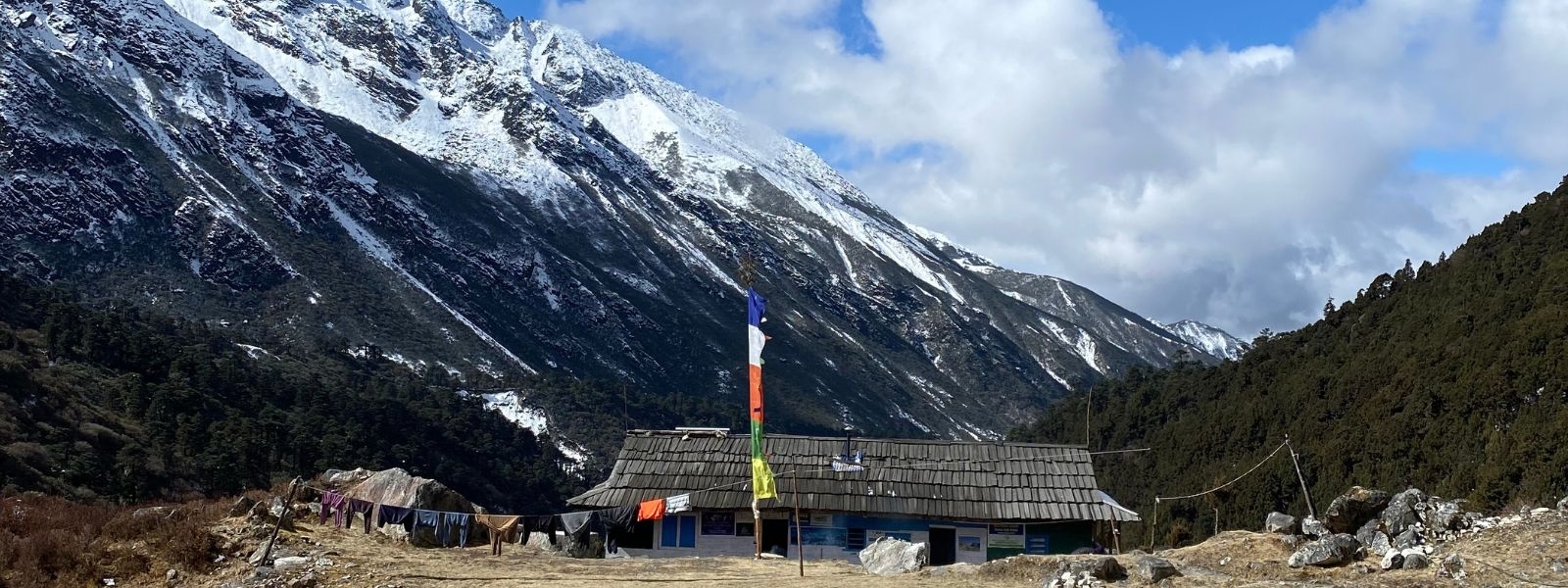
The trek consists of dense forests and roaring rivers in the foothills to high mountains in cloud and snow. We will pass through one of Nepal's least explored national parks, i.e. Kanchenjunga Conservation Area. You will not only enjoy nature, but also traditional Rai, Limbu, and Sherpa villages, and sleep in cozy tea houses. We wake up each morning to mountain views that will stay with you for a lifetime.
Kanchenjunga is situated in Taplejung of eastern Nepal. Standing at an altitude of 8,586 meters (28,169 feet), Kanchenjunga is the third-highest mountain peak in the world. The peak is widely famous as “The Five Treasures of Snow”. Kanchenjunga, known as ‘Kang-Chhen-Dzo-Nga’ in Tibet is a highly protected area. The region shares the borders, and is strictly protected to maintain its ecosystems, endangered wildlife, and sacred cultural significance.
Did You Know?: Kangchenjunga was once assumed to be the highest mountain in the world.
Beyond deep cultural roots and spiritual importance, Kanchenjunga is also known for its extreme difficulty and danger. Among all the Himalayan peaks in Nepal, it is considered one of the most challenging mountains for climbers. In fact, after Annapurna, Kanchenjunga has earned a reputation as one of the deadliest mountains to attempt.
Many interested viewers keep wondering “where is kanchenjunga located?”, and the confusion is real. Kanchenjunga sits between Nepal and India and is shared by two countries. The Taplejung district of Nepal carries the getaway to the main climbing route of Kanchenjunga Base Camp. Both countries have protected the place through conservation areas and national parks.
Travelers also often get confused on “can we trek Kanchenjunga from both Nepal and India?”. Yes, trekking to Kanchenjunga Base Camp trek from both Nepal and India is possible. But, cross-border trekking to KBC trek is strictly not allowed. You have to choose between Nepal or India to complete the trek and should stick to the same trail till the end.
The main highlight of Kanchenjunga Base Camp trek is it has two base camps: south and north. You get to choose your own route prioritizing your interest.
As the sun slowly lights up the hills and snowy peaks, you continue walking through peaceful villages, forests, suspension bridges, and remote mountain trails for multiple days. The journey is rewarding yet physically demanding along with wilderness experience.
You will spend roughly 6 to 8 hours trekking and end up at tea houses for the night sleep. You relax, explore nearby, communicate with fellow tourists, and enjoy the cozy night under the mountain atmosphere.
YES. No trek is easy as it demands physical movements for an average of 5 hours. Kanchenjunga is located in one of the most isolated and challenging routes among many famous trekking routes of Nepal.
We grade this trek as "challenging" because you cross the mountain passes, as well as take difficult ascents and descents. However, with sufficient preparation, you may accomplish the trek.
Kanchenjunga Circuit Trek has everything that one adventurous soul craves for. This experience will be thrilling yet exciting if you are well-prepared for challenges and take the necessary precautions.
At least two people are mandatory in order to enter the restricted Kanchenjunga region. The authorities mandate a government-licensed guide, and at least two Kanchenjunga South Base Camp Trekking Permits (for two international travelers) during the entry. So, if you are a solo traveler, highly interested to accomplish Kanchenjunga South Base Camp Trek, Join Us for Group Trekking.
Note: RAP must be obtained through a registered Nepali trekking agency, like Hidden Trek Nepal.
|
Day |
Route |
Altitude (m) |
Duration |
Activity |
|
1 |
Kathmandu to Dharan |
349m |
8–9 hrs |
Scenic drive to eastern Nepal |
|
2 |
Dharan to Taplejung |
1,820m |
8–9 hrs |
Mountain drive through hilly terrain |
|
3 |
Taplejung to Yamphudin |
1,692m |
7–8 hrs |
Off-road drive to the trek start point |
|
4 |
Yamphudin to Tortong |
2,980m |
7–8 hrs |
Trek through dense rhododendron forests |
|
5 |
Tortong to Cheram |
3,868m |
5–6 hrs |
Ascent following the Simbuwa Khola |
|
6 |
Cheram to Ramchaur |
4,610m |
3–4 hrs |
High altitude trek with glacier views |
|
7 |
Base Camp & back to Cheram |
4,741m / 3,868m |
5–6 hrs |
Visit Oktang Viewpoint / South Base Camp |
|
8 |
Cheram to Tortong |
2,980m |
4–5 hrs |
Descent back through alpine terrain |
|
9 |
Tortong to Yamphudin |
1,692m |
5–6 hrs |
Return to the lower valley settlements |
|
10 |
Yamphudin to Phikkal |
1,500m |
8–9 hrs |
Drive back to the tea capital of Ilam |
|
11 |
Phikkal to Kathmandu |
1,400m |
12 hrs |
Night bus journey to the capital |
Day 1: Kathmandu to Dharan (Drive) 8-9hr
Day 2: Dharan to Taplejung (Drive) (1820m/ 5,842ft, 8-9 hours)
Day 3: Taplejung to Yamphudin (1692m/ 5,496ft, 7-8 hour off-road drive)
Day 4: Yamphudin to Tortong (2980m/ 9565ft 7-8 hours)
Day 5: Tortong to Cheram (3868m/ 12416ft 5-6 hours)
Day 6: Cheram to Ramchaur (4610m/ 14798ft 3-4hr)
Day 7: Ramchaur to South Base Camp (4741m/ 15215ft) and trek down Cheram ( 3868m/ 12416ft, 5-6 hours)
Day 8: Cheram to Tortong (2980m/ 9565ft, 4-5 hours)
Day 9: Tortong to Yamphudin (1692m/ 5431ft, 5-6 hours)
Day 10: Yamphudin to Phikkal Drive (8-9 hours)
Day 11: Phikkal to Kathmandu by Night Bus (12 hours)
Early in the morning, we take a long but scenic drive from Kathmandu toward the gateway of eastern Nepal, Dharan. The whole drive takes us through the BP Highway or the East-West Highway, offering glimpses of rural life, terrace farms, and the mighty Trishuli River. You will realise much warmer air as we descend toward the flatlands of Terai.
Early in the morning, we head up to the hills of Taplejung. Your drive to Taplejung takes you through greenery and small hill towns. Taplejung is the official entrance to the Kanchenjunga Conservation Area, and also the major hub of this region. You can rest here and prepare for the remote trails ahead.
You will notice the increasing cooling weather during the drive. As the terrain is shifting from hills to mountains, you will be rewarded through more mountain views. We enjoy the drive through settlements and the agricultural fields surrounding the villages.
Our official trek begins today, taking us through chilly forests. The trail runs along the Amji Khola, passing Lassiya Bhanjyang Pass before arriving in Tortong. The river sounds and the chirping of mountain birds provide a soothing soundtrack as we gain altitude.
Following the Simbuwa Khola river, we move higher. The tree line begins to thin out, replaced by alpine shrubs and open valleys. You will start to see the first glimpses of snow-capped peaks looming in the distance.
Today is a shorter but vital day as we ascend into a high-altitude environment. We trek for a few hours as the high altitude gain might affect your health.
We trek alongside the Yalung Glacier, feeling the immense scale of the mountains around us. A frozen lake and crystal clear streams can be observed on the Yalung Glacier's terminal moraine, which is bordered by the peaks Talung (7,349m), Kabru (7,338m), and Rathong (6,678m).
Ramchaur is home to the final teahouse on the Kanchenjunga South Base Camp Trek. You'll have stunning views of Mt. Jannu, Nyukla Lanchung, and other mountains.
The highlight of our journey! Early in the morning, we hike up to the Oktang Viewpoint, also known as the South Base Camp. Right after standing at the edge of the Yalung Glacier, you are surrounded by 7,000m and 8,000m peaks, including Kanchenjunga South, Kabru, and Rathong. We will take our time embracing the view. After soaking in what exactly we came for, we descend back to Cheram for a well-deserved rest.
From today, we begin our descent, following back our steps through the forests. The air feels thicker and easier to breathe as we lose altitude. We will quietly enjoy the short trek day today.
Continuing down through the forest, we return to Yamphudin village. You might notice a lot of birds singing in a beautiful way along this path.
We leave the trails behind and take a long drive back toward the lower hills. We travel through towns and wind mountain roads as we drop back down to the lowlands. This is the end of your long and beautiful trek.
After exploring in the tea heavens, we take a night bus for our final drive back to Kathmandu. You’ll arrive back in Kathmandu the next morning, carrying memories of an incredible Himalayan adventure with Hidden Trek Nepal.
The Kanchenjunga region is best visited during two primary seasons:
Two further seasons on the Kanchenjunga Circuit Trek are summer and winter. Every season has its beauty but also certain challenges.
Summer carries a lot of rain. It results in slick paths and maybe landslides that complicate the trip. With that, winter welcomes frigid weather where the temperature often falls below freezing, and the area suffers significant snowfall, rendering the trail unreachable.
Acute Mountain Sickness (AMS) is a real concern when trekking above 3,000 meters. Symptoms include dizziness, headaches, and nausea.
You may always avoid the Kanchenjunga Circuit Trek altitude sickness with enough planning. If one is well-prepared for future challenges and takes appropriate care, the experience can be really adventurous, thrilling and exciting.
Travelers often ask “who is at risk of getting altitude sickness while trekking in Nepal?" There is no clear and quick answer to this question. Anyone at the high elevations is prone to it. However, young people, and people living at lower elevations, and those with respiratory conditions are more sensitive to altitude sickness.
You should begin your preparation at least 5 to 6 weeks before your trek. Focus on cardiovascular training like hiking, jogging, or cycling to build stamina. Strength training for your legs is also highly recommended, as you will be tackling many steep ascents and descents.
Even a single day of walking will involve numerous ascents and descents. The trail to Kanchenjunga South Base Camp Treks is rugged and requires long walks. The air thins as you rise in elevation, and the cold temperature could affect you. We do not mean to scare you, but if you are not physically fit, Kanchenjunga South Base Camp Trekking can be a nightmare for anyone.
As this trek to Kanchenjunga South Base Camp is a budget package, we use public buses and shared jeeps. We will experience the journey like a local and observe the amazing Nepalese countryside at a fraction of the cost of flying. Transportation at Budget Kanchenjunga South Base Camp Trek are all managed by Hidden Trek Nepal.
Mobile network coverage (NTC/Ncell) is decent in lower areas like Phikkal and Taplejung but becomes very patchy or non-existent higher up in Tortong and Cheram. Some tea houses may offer satellite phones or slow Wi-Fi for an extra charge, but we recommend preparing to be "off-grid" for most of the trek.
Booking with Hidden Trek Nepal is simple. You can contact us via our website or WhatsApp to discuss your dates and preferences. To secure your spot, we typically require a 10% deposit along with a copy of your passport and a photo for permits.
You can almost guarantee that you will get the lodging of your choice without any hassles if you book in advance, especially during the busy trekking seasons. Starting your planning early is always a smart idea because most of the best places to stay in the area are booked for a long time in advance.
We recommend staying in Thamel, the vibrant tourist heart of Kathmandu. It’s filled with cafes, gear shops, and restaurants. We can assist with hotel bookings ranging from budget hostels to boutique hotels. Thamel is also an excellent spot to purchase or rent hiking gear.
Before Kanchenjunga South Base Camp Trek in Nepal, we suggest you take some short preparatory hikes to test your gear. Good hiking options near Kathmandu include Champa Devi, Nagarjun Hill, or Jamacho hike. You may also visit UNESCO sites like Boudhanath, Pashupatinath, and Swayambhunath to observe the cultural importances of Nepal.
After the trek, relax with a Pokhara Tour by the lake or an adventure in Chitwan National Park. If you still have energy, you can try rafting at Trishuli river or join a yoga and meditation class.
If you love to trek in a group making new friends while accomplishing the trek together, we got you covered. Many trekkers prefer a more flexible approach to their adventure. That is why we offer a specialized "Guide Only" service for the Budget Kanchenjunga South Base Camp Trek.
If you are an experienced traveler on a tight budget, you can hire one of our professional, government-licensed guides who knows the Kanchenjunga region inside and out. This allows you to manage your own logistics (such as choosing your own tea houses and meals) while still having the safety and expertise of a local expert by your side. Our guides are trained in first aid, altitude safety, and carry a deep knowledge of the local culture and history.
Hidden Trek Nepal has been taking groups to Kanchenjunga South Base Camp Trekking. So if you are interested, join the group now!
Choosing Hidden Trek Nepal means choosing expertise and authenticity. We specialize in leading group treks on off-the-beaten-path routes. Our team consists of local experts who are committed to your safety, environmental conservation, and providing a unique window into the true spirit of the Himalayas.
It is important for trekkers to be adaptable and flexible when it comes to accommodation along the Kanchenjunga South Base Camp trekking, as the conditions may vary depending on the season and location, and facilities may be limited.
We stay in traditional family-run tea houses. These are basic lodges with simple twin-bed rooms and shared bathrooms (often squat-style). While some tea houses offer hot showers and electricity for a small fee, these facilities become more limited as we go higher.
The food on the trail is hearty and energy-packed. The classic choice is Dal Bhat (rice, lentils, and vegetables), which comes with free refills and provides "24-hour power". Other options include noodles, pasta, eggs, and Tibetan bread. We recommend a vegetarian diet on the trek to avoid any risk of stomach upsets in remote areas.
Yes, Kanchenjunga region shares the borders. The region is strictly protected to maintain its ecosystems, endangered wildlife, and sacred cultural significance.
No. Government regulations for the Kanchenjunga restricted area require a minimum of two trekkers and a licensed guide.
The highest point is the Oktang Viewpoint (South Base Camp) at approximately 4,741 meters (15,554 ft).
You will experience the bumpy roads as they are unpaved, somewhere steep, and prone to landslides. So during off seasons like monsoon, you might feel the journey is physically demanding without even starting your trek.
Our route for the Kanchenjunga South Base Camp Trek is 11 days long. We happily tailor to your tastes while sticking to the rules.
If you wish to extend your days with an extra adventure, we strongly recommend Kanchenjunga Circuit Trekking, which covers not only the south base camp but also the north base camp, as well as plenty of additional sights. Extending days only on the Kanchenjunga South Base Camp is also available.
You require a good level of fitness, with steep and long ascents. You should be able to walk at least for 4-5 hours a day. We recommend active physical conditions including cardio and strength training before the trek.
The landscape keeps changing almost every day. You will begin the trail through warm subtropical valleys. You gradually ascend toward beautiful rhododendron and bamboo forests filled with peaceful mountain vibes. As you gain altitude, the scenery opens into wide alpine meadows, rugged highlands, and finally the raw glacial terrain near the base camp. Each day feels different from the last, making the journey itself just as rewarding as the destination.
Every trek with Hidden Trek Nepal is guided by experienced and licensed professionals. They speak good English, are trained in first aid, and know the trails inside out.
In a few lower-altitude villages, you might find bucket showers available, usually for a small extra charge.
Electricity is quite limited in most places. When it is available, it often comes from solar power, so charging options can be slow and not always reliable. We highly recommend you to carry a power bank or even a small solar charger to keep your devices powered throughout the trek.