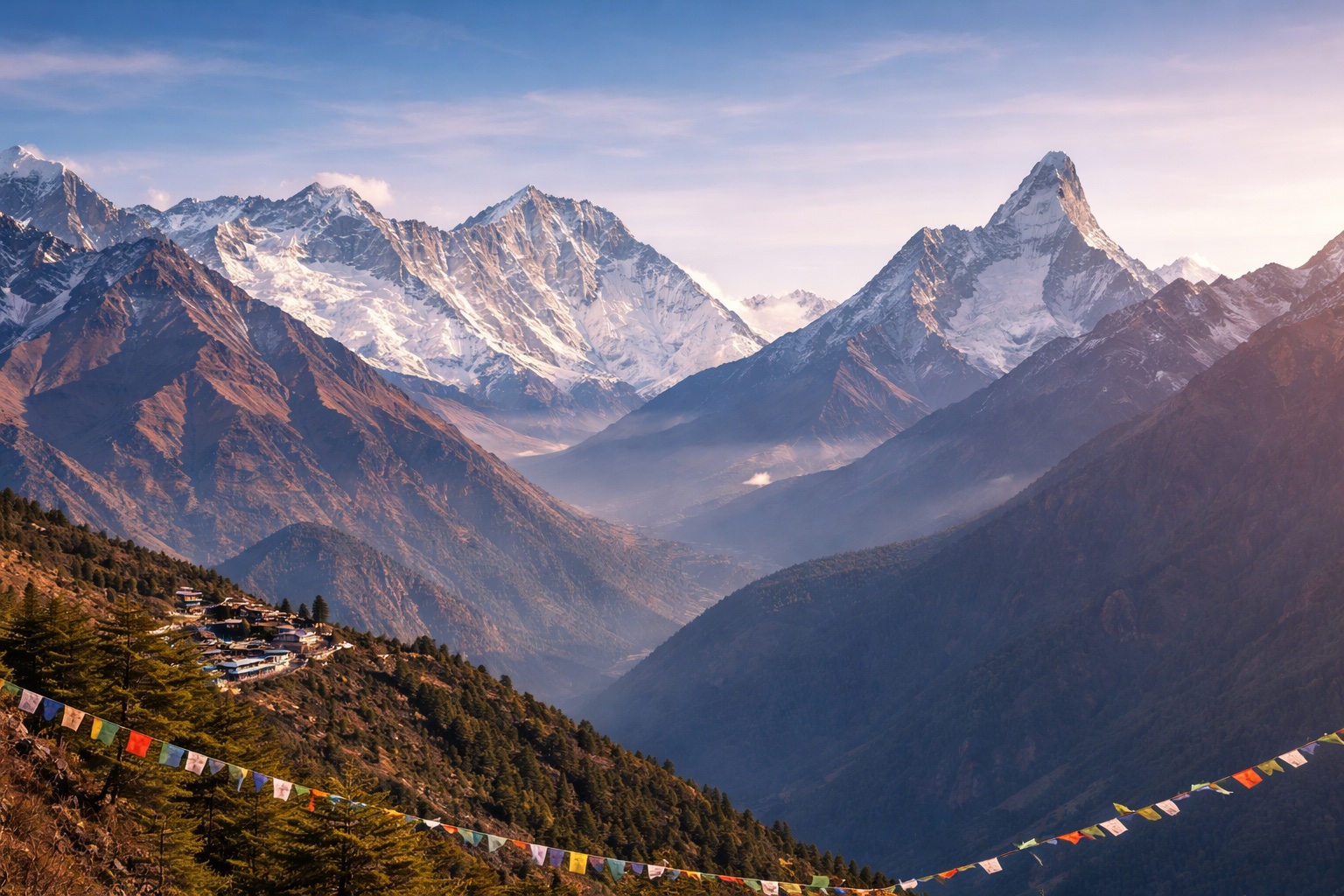
Avalanche Kills Legendary Mountaineer | All About Nirmal Purja
On 1 August 2026, Nepal and the global mountaineering community received devastating news: Nirmal “Nims” Purja, one of the most influential Himalayan climbers of the modern era, had died following an avalanche incident. The disaster occurred on July 30, 2026, on the world’s 12th highest mountain, Broad Peak (8,051 m), located in the Karakoram range of Pakistan. Elite Exped, his expedition organization, confirmed his death.
Purja was leading an 11-member international expedition that included climbers from Nepal (six members including Purja), the United States, Pakistan, Oman, and China. Tracking data indicated that the team was moving between Camp 2 and higher elevations, at approximately 6,579 to 6,660 metres, when the avalanche struck around 9:00 AM local time.
Confirmed facts reveal a grim sequence: Purja’s GPS tracker showed a sudden, sharp drop in altitude followed by a brief shift in location before the signal permanently ceased.
Nims was a legendary Nepali mountaineer, former British Special Forces soldier, expedition leader, and founder of Project Possible and Elite Exped. The incident occurred during one of the most challenging phases of the expedition, when climbers were exposed to unstable snow conditions and rapidly changing Himalayan weather.
For Nepal, the loss is far more than the death of an athlete. Purja represented a new generation of Nepalese mountaineers who moved beyond the traditional image of Sherpas as support climbers. He established his team as expedition leaders, innovators, and global figures in their own right.
Who was Nirmal Purja?
Early Life of Nirmal (Nims) Purja
Nirmal Purja was born on 25 July 1983 in the Myagdi district of Nepal. He was raised in the shadow of Dhaulagiri, yet his early life was defined more by the heat of the plains than the cold of the peaks. When he was four, his family moved to the Chitwan District.
Like many young Nepalese people, he searched for opportunities beyond his hometown. His early years were shaped by discipline, ambition, and a desire to challenge himself. His family was humble, his father was a Gurkha soldier, and his mother came from a farming family.
Purja recalled a childhood of extreme poverty, famously telling National Geographic, “I remember I didn’t even have flip-flops”. Despite these hardships, he was a child of immense ambition and physical vitality, becoming proficient in kick-boxing during his youth.
Unlike many famous climbers who began climbing at a young age, Purja entered the mountaineering world relatively late. His transformation from soldier to elite climber was not the result of childhood obsession alone, it was built through years of military discipline, physical preparation, and personal determination.
The Soldier Nirmal Purja
Before becoming one of the world’s most famous climbers, Nirmal Purja served in the British Army. He joined the legendary Brigade of Gurkhas. The Gurkhas have a long and respected history within the British military. Purja’s military career played a crucial role in shaping the mindset that later allowed him to succeed in extreme mountaineering.
During his service, he demonstrated exceptional physical ability and leadership skills. His determination eventually led him to become one of the first Nepalese soldiers selected for the elite Special Boat Service (SBS), one of the United Kingdom’s most demanding special forces units. Selection for such units requires extraordinary endurance, mental toughness, teamwork, and the ability to perform under extreme pressure.
He spent nearly 16 years in the British military. In the SBS, Purja became a subject-matter expert in cold-weather warfare, a role that required him to survive and operate in the world’s most hostile environments. The experience transformed Purja’s understanding of human limits.
The Mountaineer Nirmal Purja
His transition from soldier to professional mountaineer began almost by accident during a 2012 trek to Everest Base Camp. With no previous mountaineering experience, he managed to summit Lobuche East (6,119m) during that trip, a feat that shocked his guides and revealed a "freakish" natural ability to acclimatize.
His first Eight-Thousander came on May 18, 2014, when he summited Dhaulagiri in a return trip of just 15 days. This was followed by his first ascent of Mount Everest on May 13, 2016. In 2017, he led the “G200E” Gurkha Expedition, taking 13 of his fellow soldiers to the top of Everest to celebrate 200 years of Gurkha service to the British Crown.
It was during these early expeditions that the seeds of Project Possible were sown. By 2018, when he was awarded an MBE by Queen Elizabeth II for his mountaineering achievements, he had decided to walk away from his military life to show the world that "Nothing is Impossible". His goal was no longer just to climb, but to compress years of mountaineering history into a single season, setting the stage for the most audacious speed record the Himalayas had ever seen.
Project Possible: Nims Changed the Mountaineering History
In 2019, Nirmal Purja launched Project Possible, one of the most ambitious mountaineering projects ever attempted. The objective was simple to describe but almost impossible to achieve: Climb all fourteen mountains above 8,000 meters in less than seven months.
The fourteen eight-thousanders are the highest mountains on Earth:
- Everest
- K2
- Kangchenjunga
- Lhotse
- Makalu
- Cho Oyu
- Dhaulagiri
- Manaslu
- Nanga Parbat
- Annapurna I
- Gasherbrum I
- Gasherbrum II
- Broad Peak
- Shishapangma
The previous record was seven years, ten months, and six days, held by South Korean Kim Chang-ho.
Unlike many international expeditions backed by major sponsors, Project Possible initially struggled for funding. Purja had to be as bold in the boardroom as on the mountain, eventually selling his house and giving up his military pension to secure the necessary capital.
Project Possible Phase One
Phase One of the expedition began on April 23, 2019, with Annapurna, followed by Dhaulagiri, Kangchenjunga, Everest, Lhotse, and Makalu. Purja summited Everest, Lhotse, and Makalu in a single 48-hour window, setting a Guinness World Record.
It was during this phase that Purja took the viral "traffic jam" photograph of a queue of climbers near Everest’s summit. The overcrowding of the high peaks image became viral, forcing the Nepali government to reconsider its permit regulations.
Despite the focus on speed, Purja repeatedly paused his project to assist others. On Annapurna, he led a rescue mission for a Malaysian climber left for dead by another team. Weeks later on Kangchenjunga, he and his team sacrificed their own supplementary oxygen at 8,450 metres to rescue three climbers in distress, an act Purja later described as a "suicidal attempt" and his hardest moment.
Project Possible Phase Two and Three
Phase Two took the team to Pakistan in July 2019, where they scaled Nanga Parbat, Gasherbrum I, Gasherbrum II, K2, and Broad Peak in a single month. Phase Three concluded in October 2019 with Cho Oyu, Manaslu, and finally Shishapangma, for which Purja had to secure a rare special permit from Chinese authorities through high-level diplomatic intervention by the Nepali government. On October 29, 2019, Purja stood on the summit of Shishapangma, completing his quest in just six months and six days.
Purja Climbs K2 in Winter
Mount K2, known as "The Savage Mountain," was the only eight-thousander that had never been summited in winter despite decades of attempts. The mountain goes extremely cold (-65°C) and hurricane-force winds repel the world’s elite.
On January 16, 2021, the nine teams reached the summit together. They stopped ten metres before the peak and sang the Nepali national anthem as they walked the final steps to the top. Purja further cemented his legend by being the only member of the team to reach the summit without supplemental oxygen, becoming the first person in history to do so in winter.
This ascent was widely hailed as one of the greatest feats in the history of mountaineering and transformed Purja into a global icon of Sherpa excellence and leadership.
He Conquered all Again, this time without Oxygen
Purja began a deliberate shift toward climbing without bottled oxygen. He argued that his first round of summits was about showing what was "logistically possible," but his subsequent goals were about pushing the physiological boundaries of the human body.
By May 2022, he set a new speed record for the ascent of Kangchenjunga, Everest, and Lhotse without oxygen in under nine days. His relentless pace continued into 2025 and 2026, as he sought to maximize his total summits.
On July 3, 2025, he completed the 50th successful 8,000-metre summit in Nanga Parbat, a numerical milestone never before reached by any climber. By the time of the Broad Peak avalanche in 2026, he had increased this count to 56 summits, including eight successful ascents of Mount Everest.
Unfortunately The Final Mission: Broad Peak that took his Life
Purja visited Pakistan with his other mission (to climb Karakoram), but reaching there his mission shifted. His primary focus had been the "Hat-Trick Challenge", a mission to complete all 14 peaks and the Seven Summits for a third time to raise funds for his foundation.
However, a last-minute realization while in Pakistan changed his trajectory. In what would become his final communication to his followers, Purja explained that he had "run the numbers" and discovered a new "impossible" feat was within reach.
He explained in his Instagram post, "Initially, the plan was to climb just G2," he wrote in a post dated just days before the Broad Peak avalanche. "But just before setting off... it hit me: if I tick off Broad Peak whilst I’m here, only one remains 'Cho Oyu.' Then I become the FIRST person in history to climb all 14 eight-thousanders twice. Without oxygen." This ambition to complete the "Double 14" without supplemental oxygen was a response to his critics and a final test of his own mantra: "Nothing Is Impossible".
His final words were a prayer for the mountain: "Broad Peak, I ask for nothing but safe passage up and back down. I take zero mountains for granted... The moment my foot leaves basecamp, it’s 100%." He dedicated the climb to both his supporters and his critics, stating that without both, "there is no fire". His ultimate purpose, he claimed, was not about records, but about representing a truth for everyone: "showing YOU that your own mountains-whatever they are-are climbable".
FAQ
Q1: Who was Nirmal Purja?
A: Nirmal Purja was a Nepalese mountaineer, former British Army Gurkha soldier, expedition leader, and founder of Project Possible and Elite Exped.
Q2: What was the age of Nirmal Purja?
A: Nirmal Purja was born on July 25, 1983 AD. He died at the age of 43.
Q3: Was Nirmal Purja in the military before?
A: He served 16 years in the British military, joining the Gurkhas in 2003 before moving to the elite Special Boat Service (SBS).
Q4: Was he the first Gurkha in the SBS?
A: Yes, he made history in 2009 by becoming the first-ever Gurkha to be accepted into the Special Boat Service, the UK's elite naval special forces unit.
Q5: Which 8,000-metre peak did Nims summit first?
A: His first eight-thousander was Dhaulagiri, which he submitted on May 18, 2014.
Q6: What is "Project Possible 14/7" by Nims Purja?
A: Project Possible was the Purja mission to climb all 14 of the world’s 8,000-metre peaks in just seven months.
Q7: Did Nirmal Purja climb three 8000m peaks in the same day?
A: He set a Guinness World Record by summiting Everest, Lhotse, and Makalu within a single 48-hour window.
Q8: Did Nims climb K2 during winter?
A: Yes. In January 2021, he led a team of ten Nepali climbers to the first-ever successful winter ascent of K2, the "Savage Mountain".
Q9: What is Elite Exped by Nirmal (Nims Dai) Purja?
A: It is a premium high-altitude guiding company co-founded by Nirmal Purja and Mingma David Sherpa.
Q10: How many total 8,000-metre summits did Nirmal Purja achieve?
A: By mid-2026, he had achieved a world-record 56 successful summits of peaks above 8,000 metres.
Q11: What was the "Hat-Trick Challenge" by Nirmal Purja?
A: It was a mission to climb all 14 eight-thousanders and the Seven Summits for a third time to raise funds for his foundation. The sudden demise of Purja couldn’t complete the challenge.
Q12: When and how did Nirmal Purja die?
A: He was confirmed dead on August 1, 2026, following a catastrophic avalanche on Broad Peak in Pakistan on July 30.
Q13: Did Purja have a degree?
A: Yes, he held a postgraduate diploma in security management from Loughborough University in England.
Q14: How many times did Nirmal Purja summit Everest?
A: He successfully reached the summit of Mount Everest eight times during his career.
Q15: What was Purja’s final statement before the Broad Expedition?
A: He claimed his purpose was to represent potential and show everyone that their own personal "mountains" are climbable.
Q16: Where can I learn more about the legacy of Nirmal Purja?
A: His life and missions are documented through his foundation, his company Elite Exped, and his best-selling autobiography Beyond Possible.
Q17: What is the documentary featuring Nirmal Purja?
A: His journey was featured in Netflix’s 14 Peaks: Nothing Is Impossible.
Q18: What is the name of Nirmal Purja's wife?
A: Her name is Suchi Purja. The couple got married on 2006 A.D. They have one daughter together.