






.png)
Often described as a trek for seasoned adventurers, Makalu Base Camp attracts the visitors looking to experience untouched landscapes far from the busy trekking routes of Everest and Annapurna. This trek is one of the most challenging and rewarding high-altitude adventures in Nepal. The trail takes you deep into the remote eastern Himalayas, gradually climbing through the lush Arun Valley and into the breathtaking wilderness of Makalu Barun National Park.
The trek covers roughly 160 to 200 kilometers, passing through traditional Rai and Sherpa villages, terraced farmland, dense rhododendron forests, bamboo groves, and alpine meadows. Your destination comes after the dramatic glacial landscapes surrounding Makalu Base Camp (4,870 meters / 15,977 feet).
Since accommodation options become limited beyond Tashigaon, parts of the trek may combine teahouse stays with supported camping, offering an authentic Himalayan expedition experience in one of the most pristine trekking regions in Nepal.
Quick Trip Facts:
Difficulty: Strenuous (Grade 4).
Max Altitude: 4,870 m (Base Camp) to 5,250 m (High Exploration).
Duration: 19 Days.
Best Season: Spring (April-May) and Autumn (October-November).
Accommodation: Basic Teahouses and Organized Camping.
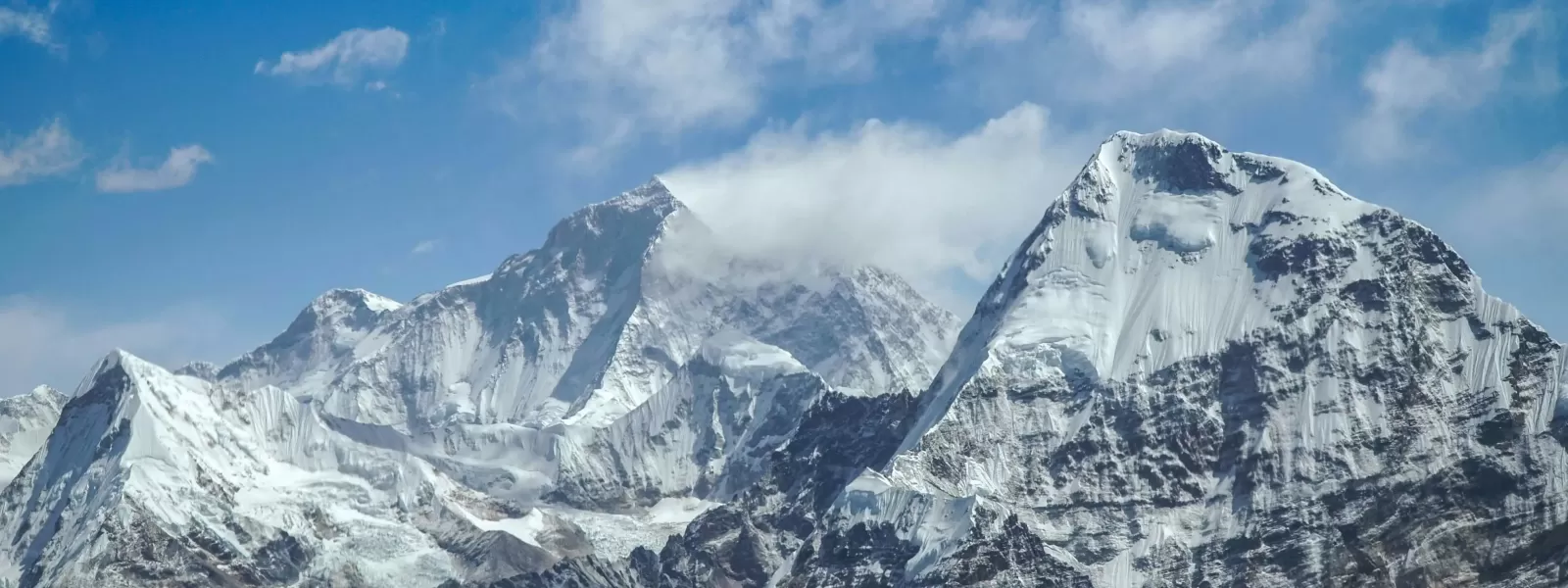
Mt. Makalu (8,463 m) is the fifth-highest mountain in the world and one of the most spectacular peaks in the Himalayas. The summit is strikingly pyramid-shaped and its four sharp ridges make it instantly recognizable. However, the steep terrain and technical climbing routes have made it famous as one of the most difficult 8,000-meter mountains to summit. Makalu lies about 19 kilometers southeast of Mount Everest, standing proudly in one of the most remote corners of the Himalayas.
The mountain lends its name to the surrounding Makalu Barun National Park and Conservation Area, a protected region established in 1992 to preserve its extraordinary landscapes and rich biodiversity. The national park connects with Sagarmatha National Park in Nepal and Qomolangma National Nature Reserve in Tibet, creating one of the most significant protected mountain environments in the world.
Every day on the Makalu Base Camp Trek follows a pattern, mouth opening scenery, and memorable physical challenge. Your daily schedule generally remains consistent.
Makalu Base Camp trek is considered strenuous, significantly more challenging than the Everest Base Camp trek. The main challenge in this trek comes from the rapid gain in altitude, having some days to climb up to 1,500 meters. This far exceeds the recommended daily ascent and increases the risk of altitude sickness.
Also, the route isn’t commercialised like Everest and Annapurna Base Camp trek, having fewer infrastructures. Since the upper sections of the route have little to no reliable teahouse infrastructure, trekkers must be prepared to be self-sufficient and need to have strong physical endurance throughout the journey. These facilities make the trek a little more difficult than other commercialised treks in Nepal.
Also, expect to spend 6 to 8 hours each day hiking across exposed mountain terrain and crossing high passes, including Shipton La (4,216 m).
Necessary trekking permits are simple when you book with Hidden Trek Nepal. For the Makalu Base Camp Trek, you'll need two essential permits and our team will help you acquire it:
Day 1: Kathmandu To Tumlingtar to Chichila (Drive)
Day 2: Chichila To Num
Day 3: Num to Seduwa
Day 4: Seduwa To Tashi Gaon
Day 5: Tashi Gaon To Khongma Danda
Day 6: Acclimatization Day
Day 7: Khongma Danda To Dobato
Day 8: Dobato To Yangla Kharka
Day 9: Yangla Kharka To Langmale Kharka
Day 10: Langmale Kharka To Makalu Base Camp
Day 11: Explore Makalu Base Camp
Day 12: Makalu Base Camp To Yangla Kharka
Day 13: Yangla Kharka to Dobato
Day 14: Dobato To Khongma Danda
Day 15: Khongma Danda to Tashi Gaon
Day 16: Tashi Gaon to Seduwa
Day 17: Seduwa to Num
Day 18: Num to Chichila to Tumlingtar (Drive)
Day 19: Tumlingtar To Kathmandu (Flight)
Your journey begins with a 40 minutes early mountain flight to Tumlingtar. If the weather is on our side you will enjoy the view of Mt. Makalu, Mt. Everest, Ganesh Himal etc. Upon reaching, we will take a straight 4 hours drive to Rai village of Chichila.
After breakfast we officially start our trekking from this day. Our first day of trekking starts with a descent through the rhododendron forests and green valleys. We cross the Arun river and reach Num, situated on a ridge overlooking the river.
Like the previous day, you descend steeply to the river, and cross a suspension bridge of Barun River. Now you climb back up into the Makalu Barun National Park to reach Seduwa.
A pleasant 5 hour walk through cultivated farmlands, and Rhododendron forests brings you to Tashi Gaon, the last permanent Sherpa settlement on the route.
Today, the challenge begins with a strenuous uphill climb straight gaining 1,400 meters. You finally start to get the mountain views just like how it should be seen. After lunch break we continue our ascent again, reaching Khongma Danda, offering your first big mountain panoramas.
A strenuous walk from the previous day deserves an acclimatization day. Today is a critical rest day, where we do not rest but roam around the same altitude to make your body used to higher elevations.
You need to listen more to your body from this day forward. You have breakfast and explore the ridge to help your body adjust to the thin air before crossing the passes. The rest of the day we keep connecting to the Sherpa community
Today will be a spectacular but exhausting day crossing the Ghungru La (4,055m) and Keke La (4,170m) passes to reach the seasonal outpost of Dobato. Crossing two passes in a single day might sound exhausting. Though your body needs to be prepared for this adventure, both passes don't lie much higher. If you are physically fit, this shouldn’t be much hard for you.
You descend into the Barun River valley, walking through juniper forests to reach the scenic meadow of Yangmale Kharka. You will pass through yak pastures with the view of yak grazing.
Early morning after breakfast you ascend through alpine meadows all the way to Langmale Kharka. Surrounded by towering peaks you will rest in Langmale Kharka.
The final push of the entire trek! We hike all over rocky trails and the Barun Glacier to reach Makalu Base Camp. Surrounded by the wilderness, you get your time alone to enjoy the place. Untouched by the commercialization all you see is pure nature.
You will get plenty of time to explore a base camp today. The extra 3 hours hike includes a walk to a ridge viewpoint for an extra mind-blowing panorama of Makalu, Lhotse, and the Kangshung face of Everest.
Begin your return journey, descending through the now-familiar pastures of Langmale to reach Yangmale Kharka.
You will retrace your steps down the Barun Valley. You will slowly start to feel thicker and more oxygen-rich air. This will make your trek more gentle.
Today is the day again, to recross two high passes; Ghungru La Pass at (4055 m) and Keke La Pass at (4170 m). Many trekkers find the crossing easier on the way back due to their improved acclimatization. You have been at a higher altitude for a few days, so crossing these passes should be comparatively easy.
Today you trek short but it will be a long descent through rhododendron forests. The descent brings you back to the comforts of Tashi Gaon, where hot showers and charging stations are finally available. The tea houses will have more facilities from now on.
Today will be the shorter hiking day through the agricultural heartland of the lower valley back to Seduwa.
Your final full day of hiking involves one last steep descent and climb to return to Num. This will be the last day of your trek, don’t forget to enjoy this memory of lifetime even with tired bodies.
A 7 hours local jeep drive takes you back to the plateau of Tumlingtar, where you can celebrate the completion of your trek. You might change the jeep at Chichila and reach all the way to Tumlingtar.
You will board your flight back to the capital, enjoying one last overhead look at the Himalayas you just conquered.
Choosing the right season is one of the most important factors for a successful Makalu Base Camp Trek. Favorable weather and clear trail conditions are very important for both safety and enjoyable trekking.
Autumn is widely known as the ideal time to trek to Makalu Base Camp. Autumn starts right after monsoon, dusting off the pollution and offering crystal clear skies. The weather is generally stable, and the trails become dry. You see HD versions of nature, making it the perfect season for photography and high-altitude trekking.
Spring is another excellent time to explore the Makalu region. The forests come alive with blooming rhododendrons, magnolias, and other wildflowers, adding vibrant colors to the landscape.
Heavy rainfall during the monsoon makes the trails slippery and increases the risk of landslides and swollen rivers. Leeches are common in the lower forests, and clouds often hide the Himalayas. Trekking during this season can be challenging and also unpredictable.
Winter covers the Makalu region from snow, and also brings extremely cold temperatures that can fall well below -15°C at higher elevations. Heavy snowfall often blocks Shipton La Pass, making the route difficult or even impossible to cross. Unless you're well-prepared for harsh winter conditions, this season is generally not recommended for the Makalu Base Camp Trek.
The Government of Nepal has made it mandatory for all foreign trekkers visiting the Makalu Base Camp Trek to be accompanied by a licensed trekking guide. This regulation has been introduced to improve the safety of the visitors, and protect them from the fragile mountain environment. Mountains should be walked through forests and the government is trying best to ensure visitors receive proper assistance while exploring one of the most remote trekking regions.
Keeping all that in mind, Hidden Trek Nepal offers a flexible "Guide Only" service for independent trekkers. This service is for those who prefer to organize their own accommodation, meals, and transportation while still meeting the trekking requirements. You hire a professional government-licensed guide without purchasing a full trekking package, giving you greater control over your travel budget and itinerary.
Our guides are experienced locals of the Makalu region, experienced with the weather conditions, local culture, and altitude-related challenges. Your guide not only leads you throughout the route, s/he monitors your health, and assists with permits and logistics. Our guide will help communicate with local teahouses, and ensure you have a safe trekking experience from start to finish.
Whether you are a solo traveler, a couple, or a small group, our guide service is designed for adventurers seeking flexibility at a reasonable price without compromising on safety. You can travel at your own pace while taking service from the expertise, and support of a trusted trekking professional.
With Hidden Trek Nepal, you'll experience the untouched beauty of the Makalu region with confidence. Enjoy the trek knowing that an experienced local guide is there to help you on one of the least-explored Himalayan trails of Nepal.
Makalu Base Camp Trek reaches an elevation of 4,870 meters, increasing a possibility of experiencing Acute Mountain Sickness (AMS). While many trekkers complete the trek without serious issues, it's important to understand the symptoms and take the necessary precautions to ensure safety.
Common signs of altitude sickness include headache, dizziness, unusual fatigue, nausea, loss of appetite, difficulty sleeping, and shortness of breath even while resting. These symptoms should never be ignored, especially as you continue gaining altitude. Make sure to update your guide about the symptoms.
The most important rule in high-altitude trekking is simple: never continue climbing if your symptoms are getting worse. Mild symptoms can improve with rest if you notify your guide. If it doesn’t, the safest decision is to descend to a lower altitude immediately. Your health should always take priority over reaching the destination.
Proper acclimatization is the best way to prevent altitude sickness. Drink 3 to 4 liters of water each day to stay well hydrated, ascend gradually, and follow your guide and itinerary without rushing. Avoid alcohol and smoking during the trek, eat nutritious meals, and get enough rest to help your body adjust to the thinner air.
Experienced guides are trained to recognize the early signs of AMS, monitor your condition throughout the journey, and make informed decisions if altitude-related problems arise. Carrying an experienced guide means carrying safety with you throughout the trekking.
You don't need technical climbing skills, but you do need "mountain legs". We recommend you to start training 3-6 months before your trek with cardios like running, swimming, or cycling to build endurance. You can also be involved in strength workouts like squats and lunges to prepare your legs for the steep ascent. We also recommend you to hike weekend treks with a loaded backpack to simulate trail conditions.
Expect basic teahouses below Tashigaon, which only provides simple rooms with shared squat toilets. Above Tashigaon, infrastructure is more minimal. If teahouses are full or closed, we use organized camping with our cook crew and high-quality tents.
Meals are simple but filling.
Reaching the starting point of the Makalu Base Camp Trek is part of the adventure. You'll take a 45-minute flight from Kathmandu to Tumlingtar, followed by a 5 to 6-hour jeep drive to Chichila.
As domestic flights are weather-dependent, occasional delays can occur, so it's wise to keep an extra day in your travel plans. Hidden Trek Nepal arranges all transportation to ensure a smooth and comfortable journey.
Communication becomes increasingly limited as you enter deeper into the Makalu region. Mobile network coverage and Wi-Fi are available in some lower villages, such as Seduwa and Tashi Gaon, but connectivity becomes unreliable or unavailable as you enter the remote Barun Valley.
Booking your Makalu Base Camp Trek with Hidden Trek Nepal is simple and hassle-free.
Note: By making the reservations as early as possible, particularly during the peak trekking seasons, you may assure that you will be able to secure your desired accommodation without encountering any difficulties. It is always a good idea to begin your planning process as early as possible.
No. It is not recommended to drink tap or stream water without treatment. We suggest using water purification tablets, a portable filter, or purchasing boiled drinking water from local teahouses.
Temperatures vary by season, but nights at higher elevations can drop to -15°C or even lower. A quality sleeping bag and warm clothing are essential for a comfortable trek.
No technical climbing skills or equipment are required for the standard Makalu Base Camp Trek. However, microspikes can be useful if you encounter icy trails during early spring or late autumn.
Although the area is not a restricted region, trekking with a licensed guide is highly recommended due to the remote trails, limited facilities, and challenging terrain. A guide greatly enhances both your safety and overall experience.
No. ATMs are only available in Tumlingtar. Be sure to carry enough Nepalese Rupees to cover personal expenses, snacks, beverages, and tips during the trek.
Autumn (October–November) offers the most stable weather and the highest success rate. Spring is also an excellent season, although occasional snowfall at higher passes may affect trail conditions.
Yes. Makalu Barun National Park is home to a rich variety of wildlife, including Himalayan tahr, musk deer, colorful pheasants, and the elusive red panda. While wildlife sightings aren't guaranteed, the region is one of Nepal's best destinations for nature lovers.
Unlike the busy Everest region, Makalu offers a quieter and more remote trekking experience. You'll enjoy pristine landscapes, fewer crowds, and stunning panoramic views of Makalu, Everest, Lhotse, Chamlang, and many other Himalayan peaks.
Basic hot showers may be available in lower villages for an additional fee. At higher elevations, shower facilities become limited, so many trekkers rely on wet wipes and quick freshening-up routines.
Your guide will closely monitor your condition throughout the trek. If symptoms of altitude sickness become serious, you'll descend immediately to a lower altitude. In emergencies, helicopter evacuation can be arranged if weather conditions allow and your travel insurance covers rescue services.