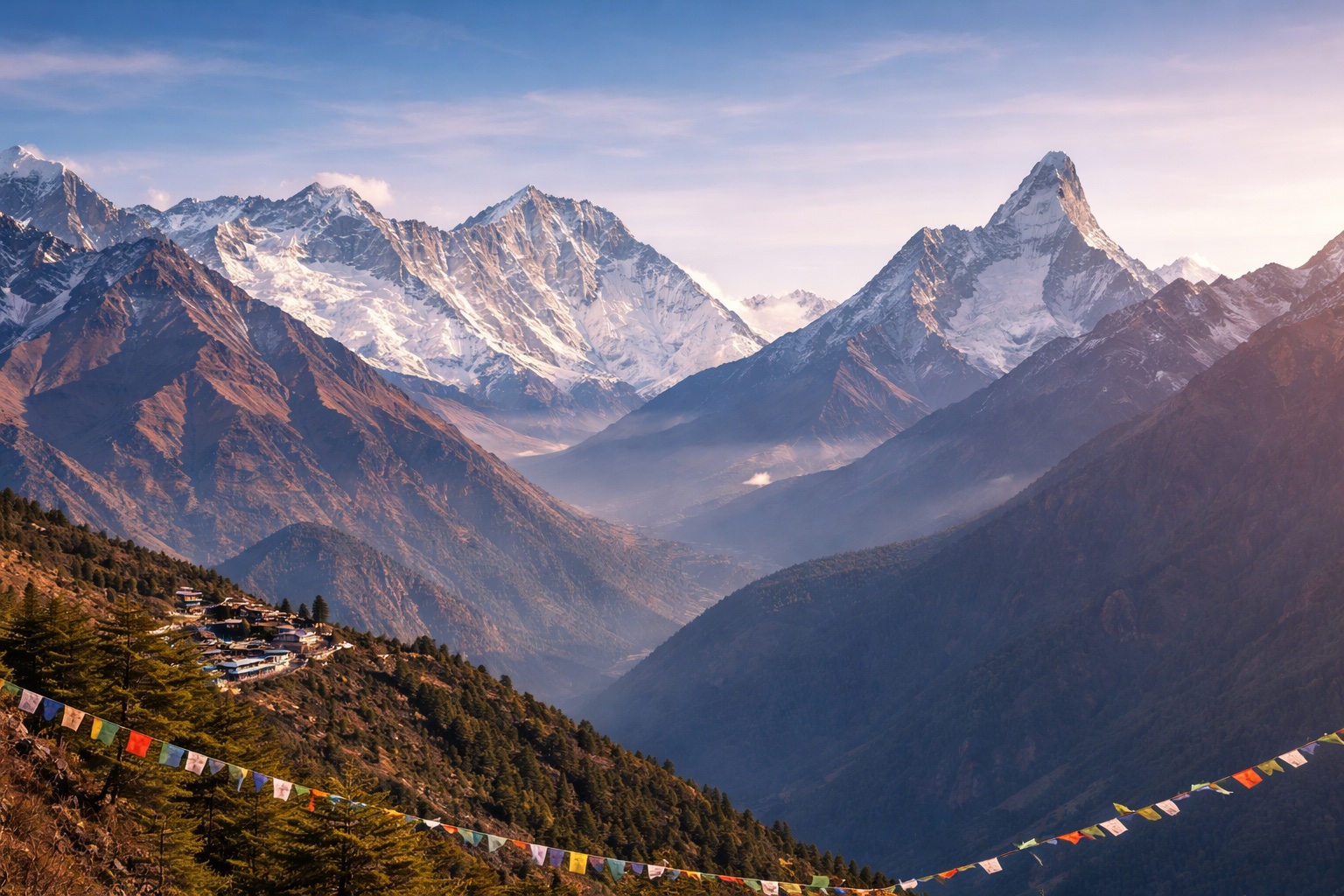
Why Kanchenjunga Treks?
Controversial one, but Kanchenjunga trek delivers the best and rawest adventure in a way that even Everest or Annapurna no longer can. The lack of commercialization has helped to maintain the originality of this trail, which is undoubtedly supported by the love and warmth of the modest family-run teahouses, where you can feel all of the compassion that outshines the need for modern comforts.
Why Choosing the Right Trekking Agency for Kanchenjunga Matters?
The Kanchenjunga region is vastly different from the Everest or Annapurna circuits. Fewer trekkers visit this region each year, mainly because it is remote, less promoted, and has limited infrastructure such as lodges, transportation, and services along the trail.
The trek also involves long distances, challenging terrain, and restricted area permits, which require proper planning and experienced guidance. For these reasons, choosing the right trekking company becomes especially important in remote routes like Kanchenjunga, where knowledgeable guides and well-organized logistics can make a significant difference in ensuring a safe and smooth trekking experience.
What Makes a Good Kanchenjunga Trekking Agency?
Famous trekking spots like Annapurna, Everest, and Langtang have become very popular with tourists, and it's not hard for trekking companies to get to those destinations.
That is why clear signs of professionalism and expertise is the most important thing to look for in the best trekking service for Kanchenjunga Nepal. Kanchenjunga is a hidden gem, and the best way to see all that it has to offer is to hire a knowledgeable guide.
Without proper support, organizing a Kanchenjunga trek independently can be complicated. A trusted trekking agency simplifies the entire process so you can focus on enjoying the journey. Beside that, make sure you look for:
1. Legal Documentation and Accountability
Reputable agencies must have active registrations with the Nepal Tourism Board (NTB), Trekking Agencies' Association of Nepal, and the Department of Tourism (DoT). These certificates verify the organization adheres to national safety rules and ethical requirements for employee care. Additionally, they must have authority to handle foreign currency through Nepal Rastra Bank for overseas bookings.
2. Specialized Regional Knowledge
Not every company is related to the remote east. The top agencies keep long-term ties with the accommodation owners of the trail. They handle accommodations and foods in the high Himalayas with ease. Smaller agencies face difficulties in doing so, which might cause complications during your whole journey.
3. Safety Systems and Staff Welfare
A top-tier operator prioritizes safety over financial pressure. They should provide:
- Certified Guides: Professionals trained in Wilderness First Aid and altitude sickness management.
- Equipment: Reliable safety gear, including pulse oximeters and first aid kits.
- Ethical Porter Support: Ensuring porters are properly insured, clothed for freezing temperatures, and not carrying loads exceeding 25kg.
Hidden Trek Nepal | Best Trekking Agency for Kanchenjunga Nepal
Hidden Trek Nepal specializes in remote Himalayan trekking and offers well-organized Kanchenjunga trekking experiences.
Deep Local Roots and Expertise
Hidden Trek Nepal has a thorough understanding of remote trekking regions, such as Kanchenjunga. Our guides acquire a understanding of the cultural traditions, local villages, and trails of eastern Nepal.
Experienced Trekking Team
Our company works with professional guides and porters who are trained in mountain safety and altitude awareness, ensuring trekkers receive reliable support throughout the journey.
An experienced trekking guide is not only a good guide, but it will also help your entire trek go smoothly, leaving you stress-free during the adventure. The staff will also be accessible prior to the walk to help you with crucial documents, bag packing, and other decisions.
Well-Planned Itineraries
Kanchenjunga treks require careful itinerary preparation due to the long distances and elevation gain. Hidden Trek Nepal creates balanced itineraries with adequate acclimatization days.
For that reason, we don't think it's a good idea to make short itineraries just to get people to come, so we tailor each one to the customer's interests, level of fitness, etc. First, we have a clear talk with you to get to know you better and then make changes based on that.
Transparent and Fair Pricing
Unusually low pricing in the business can suggest sacrifices on safety or staff wage levels. Hidden Trek Nepal offers detailed rates that include all required permissions (RAP and KCAP), domestic flights to Bhadrapur, accommodation, and meals. Transparency prevents hidden fees at trail checkpoints.
Responsible Travel Practices
The company promotes environmentally responsible tourism, respects cultural traditions, and employs local personnel to support sustainable trekking.
Services Trekkers Should Expect from a Kanchenjunga Trekking Company
Permit Management
Important Note: The Kanchenjunga trekking permit is only available to authorized trekking agencies.
The agency must get both the Kanchenjunga Conservation Area Permit (KCAP) and the Restricted Area Permit (RAP). The RAP costs around USD 20 per person per week for the first four weeks. Individuals cannot receive these, hence the agency manages all documentation at the Department of Immigration in Kathmandu.
You need to submit the following documents to Nepal's Department of Immigration office.
- Passport Copy
- Sufficient Visa Copy
- Chosen Kanchenjunga trek itinerary with dates
- Travel Insurance
Tips for Choosing the Best Trekking Agency in Nepal
The trek is more than simply a tour; you must secure your safety and security when traveling to high altitudes. And, to ensure your own safety, asking additional questions to your chosen provider never hurts. It helps you to choose your best trekking agency.
1. Verify Official Registrations: Check the agency's license numbers with the Nepal Tourism Board and TAAN.
2. Read Recent, Specific Reviews: Look for reviews on TripAdvisor or Google that mention Kanchenjunga specifically. Praise for guide names and problem-handling is more valuable than vague star ratings.
3. Ask Hard Questions Before Paying:
"What is your exact protocol if I develop altitude sickness?".
"Are your guides and porters fully insured for this specific route?".
"What is the guide-to-client ratio for our group?.
4. Evaluate Communication: A professional company like Hidden Trek Nepal will provide clear, detailed answers without using pressure-selling tactics.
5. Check for Flexibility: The best agencies can customize your itinerary, whether you want to visit only the North Base Camp, the South Base Camp, or combine both in a full circuit.
Conclusion: Plan Your Kanchenjunga Adventure
Trekking in the Kanchenjunga region offers an unforgettable experience in one of the world's last major mountain wildernesses. The location boasts "super-friendly teahouses," "pristine trails," and "some of the very best mountain scenery in the world." However, its beauty is matched by its challenges, necessitating the knowledge of a local agency.
The appropriate agency can transform a challenging trek into a satisfying accomplishment by getting restricted area permits and ensuring safety over high passes. Plan today to experience the "five treasures" of the Himalayas and immerse yourself in Limbu and Sherpa culture.
The Hidden Trek Nepal is a good option for hikers who want to see the beautiful scenery around Kanchenjunga. Trekking to Kanchenjunga with the right company can be an experience you will never forget, no matter how much experience you have or if you are just looking for a new adventure in the Himalayas.
Frequently Asked Questions (FAQs)
1. Is a guide mandatory for the Kanchenjunga trek?
Yes, because Kanchenjunga is a restricted area, Nepal government rules mandate that you must trek with a licensed guide and be in a group of at least two people.
2. How difficult is the Kanchenjunga Base Camp trek?
It is considered a challenging trek suitable for intermediate to advanced trekkers. You must be physically fit enough to walk 6 to 8 hours daily over rugged, steep terrain at altitudes reaching 5,143 meters.
Additionally, it is a true off-the-beaten-path Nepal trek that requires not only physical stamina but also a mental one. You will enter rural Nepal, where the network disappears as you get deep. Dal, bhat, and other simple meals will be your everyday meals as you escape the modern world. By saying that, we believe your decision to explore the Himalayas already signals that you are prepared for the trek, which is really important.
3. What is the best season for Kanchenjunga trekking?
The peak seasons are Spring (March to May) and Autumn (October to November). Autumn offers the clearest mountain views, while Spring features blooming rhododendrons, though it can be colder at high altitudes.
4. How do I obtain the necessary Kanchenjunga Trek Permits?
You must obtain a Kanchenjunga Conservation Area Permit (KCAP) and a Restricted Area Permit (RAP). These can only be secured through a registered trekking agency in Kathmandu.
5. Are there tea houses on the Kanchenjunga route?
Tea house-based trekking is common in the region, however facilities are less advanced than in Everest or Annapurna. In really far-off regions, your agency may need to organize basic camping.
6. How long does the Kanchenjunga trek take?
Most Kanchenjunga Base Camp treks take around 18–24 days depending on the itinerary and route chosen.
7. What are the popular treks in Kanchenjunga region?
Here are the top three treks in the Kanchenjunga Region.
- Kanchenjunga Circuit Trek
- Kanchenjunga North Base Camp Trek
- Kanchenjunga South Base Camp Trek