Last updated: 20 August 2026. Facts information are from the sources current as of this date. We highly recommend confirming the regulations, prices change, or any trekking queries with registered agencies or the issuing authority before you travel.
Quick Answer: Many trekking websites describe September, October, and November as one long “best trekking season.” But the three months can feel quite different as the autumn trail in Nepal is not defined by the Autumn stated in the calendar.
October usually has the most stable weather and clearest mountain views, making it the most busiest and expensive month. Late September can still be unpredictable because the monsoon does not always end on time. November is cooler but usually brings very clear skies, with colder temperatures, especially in the second half of the month. We have linked the sources in the blog below.
What Is the Autumn Trekking Season in Nepal?
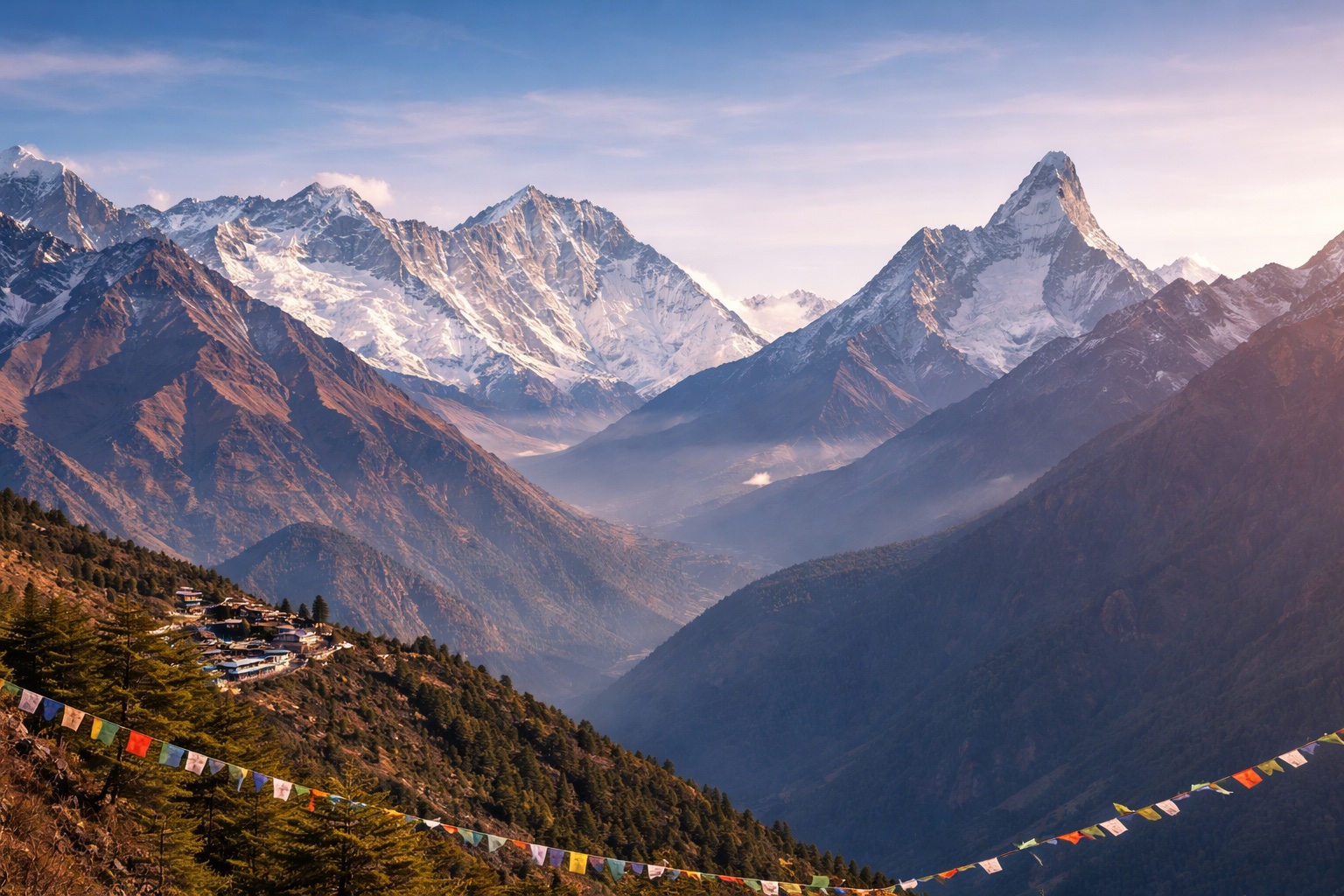
Autumn is one of the busiest trekking seasons in Nepal. This season starts right after the monsoon ends, dusting off all the view blockages and providing one of the best views. The weather remains stable and there is very little to no chance of weather disruptions.
When Does the Monsoon Actually End?
Department of Hydrology and Meteorology of Nepal data says in 2025 the monsoon withdrew from eastern Nepal on 10 October. Most recent year data have claimed that the withdrawal trend has been later than expected. DHM has also put the average monsoon withdrawal date as October 02.
“Autumn starts in September” has been a huge marketing tool rather than a true forecast. Early September has always been a monsoon with heavy rainfalls. Late September during later years has also been unpredictable.
The reliable weather starts only after October starts and remains till November. So, if you want a proper autumn view during your trek, take this as a guide because most of them selling autumn packages are not very open about this.
Does Monsoon end in Nepal at the same time?
No, monsoon withdrawal starts west to east. So western regions (Annapurna, Mustang, Dolpo) typically get clear weather a few days to a week before eastern regions (Everest/Khumbu, Kanchenjunga). So if you are confused in choosing between an Annapurna trek and Everest trek in the early-autumn, Annapurna is safer.
Why Autumn Is Considered the Best Time to Trek in Nepal
Once the monsoon genuinely clears down, autumn offers the bestest view in the Himalayas. The monsoon rain clears all the dust, so the grass gets green and the view doesn't get disturbed during the Autumn.
- Stable Weather: After the monsoon, weather settles over Nepal and brings longer dry weather.
- Comfortable temperatures: Daytime temperatures in Autumn are genuinely pleasant for trekking below 4000 m. However, late November can bring slightly more winter than in September and October.
- Clear Weather: Monsoon rain takes away dust and haze out of the air. For the first several weeks after the monsoon ends, the visibility comes at its best within a year.
- Harvest Views: You trek through hilly regions first in order to reach the Himalayas. Those hilly regions get golden with ripening rice and millet, the signature view of Autumn in Nepal.
- Major festivals: Dashain and Tihar, two biggest celebrations of Nepal, both fall within the season.
September vs October vs November: Which Autumn Month Should You Choose?
|
September |
October |
November |
|
|
Monsoon Risk |
High (Early Sep) to Moderate |
Moderate (Early Oct) to Low |
Low |
|
Crowds |
Moderate |
Very High |
Very High |
|
Daytime temp |
Warm, Humid |
Mild, Comfortable |
Cool, Crisp |
|
Night temp (4,000m+) |
Cold |
Cold |
Very Cold |
|
Visibility |
Improves |
Bestest of the year |
Excellent (degrades in late month) |
|
Price |
Lowest of other two |
Highest |
High |
Trekking in Nepal in September
Early September: The Monsoon Gamble
Early September still falls in late monsoon, inviting rain and leeches at lower elevations. There is quite a chance of the views getting obscured by clouds, and a risk of road damage. If you are prepared for the odd adventures, you can trek during this period. You will surely not be alone in the trail as there won’t be hardcore monsoon and travellers do visit in this season. However, if you aren’t prepared for the adventures, this season is not recommended.
Late September: The Transition
Conditions in late September get far better than in early months. However, in later years monsoon withdrawal has been delayed so it will be like you are betting. One of the main advantages is that the trails start to introduce visitors, making it less crowded. If you're comfortable with a chance of cloud and rain in exchange for peace, this is where you can trade it off.
Trekking in Nepal in October
Early October: Peak Clarity Arrives
Once the monsoon has withdrawn, early-to-mid October typically delivers the clearest, most stable conditions of the year.
Late October: Dashain and Crowds
The biggest festival in Nepal takes place in this window, which affects flights, guide and porter availability, and teahouse capacity even as the weather stays excellent. From this time the rate goes higher than usual due to the availability, flight/bus fare fluctuation etc.
Talking about the weather, this is one of the best times to visit actually. The weather along with free observation of the biggest festival in city/villages will add the extra spark on the trek. However, you may encounter the massive crowds of people travelling to return to their hometown to celebrate the festival. This will also affect the flight availability.
Trekking in Nepal in November
Early November: The Sweet Spot
Early November is the best time of the year to trek. There is no chance for the monsoon to reoccur, and the skies are clear. Nights gradually start to get colder at higher altitudes, but daytime conditions are ideal for trekking.
Late November: Cold Arrives Early
This time should provide the best weather to trek, but early snowfall on high passes (Thorong La, Cho La, Renjo La, Larkya La) might occur. Also the night-time temperatures at high camps rise sharply. The weather still stays trekkable, and provides a clear view, but "autumn" does start to feel like early winter.
The Best Two Weeks to Book
If you are flexible in dates and need a single recommendation for the best month in Autumn to trek in Nepal, mark the first two weeks of November. You get the best visibility in the entire Autumn, the Dashain crowd ends, teahouses are calmer than peak October, and cold altitude is manageable with the right gear.
Additionally, the festival of lights, Tihar (second biggest festival of Nepal) lies in this period. Along with mountains having the best visibility, the city also comes at its best with all the festival lights.
The trade-off is a narrower buffer if your dates slip toward late November's harder cold.
Autumn Trekking Weather in Nepal
Weather by Altitude Band
Below 2,500m
Below 2,500m, for example in Kathmandu, Pokhara, and other lower trails provide warm, pleasant days, and mild nights.
2,500m - 4,000m
Comfortable daytime hiking temperatures; night gets cool to cold, particularly from November.
Above 4,000m
Cold at all times of day, sub-zero nights are standard from October onward, dropping further as the season progresses.
Does It Rain During Autumn Trekking?
Once the monsoon genuinely withdraws, it will rarely rain during the Autumn. Isolated afternoon showers can still occur shortly, particularly in early autumn or when a late-season disturbance moves through. However, multiple day rains are unusual after mid-October.
Can It Snow in Autumn?
Yes, especially at higher altitudes and on high passes from late October onward. As November starts, snow becomes more likely on passes such as Thorong La and Cho La. If you plan to cross a high pass in the second half of the autumn season, be prepared for changing weather, snow, and possible delays. During mid winter and heavy snowfall some high passes stay closed for safety.
Best Autumn Treks in Nepal
|
Trek |
Duration |
Max Altitude |
Difficulty |
Permits Needed |
|
Everest Base Camp |
12-14 days |
Kala Pathhar (5,545m) |
Strenuous |
Sagarmatha NP + Khumbu Pasang Lhamu |
|
Annapurna Circuit |
12-18 days |
Thorang La Pass (5,416m) |
Strenuous |
ACAP |
|
Manaslu Circuit |
14-17 days |
Larkya La Pass (5.106m) |
Strenuous |
Manaslu RAP + MCAP + ACAP |
|
Langtang Valley |
7-10 days |
Kyanjin Ri (4,984m) |
Moderate |
Langtang NP |
|
Kanchenjunga Circuit |
18-22 days |
Pang Pema (5,143m) |
Very Strenuous |
RAP + KCA |
|
Annapurna Base Camp |
7-10 days |
Annapurna BC (4,130m) |
Moderate |
ACAP |
|
Ghorepani Poon Hill |
4-6 days |
Poon Hill (3,210m) |
Easy-Moderate |
ACAP |
Everest Base Camp Trek
Everest Trek is the signature autumn trek of Nepal. It is also one of the busiest treks, as due to commercialization it has been hub to both luxury and budget travellers. Late October delivers the clearest Everest, Lhotse, and Nuptse views of the year. However, you can expect a crowded trail and full teahouses at Gorak Shep and Dingboche during the peak weeks.
Annapurna Circuit Trek
Annapurna definitely provides a broader range of scenery than EBC. With Thorong La as the technical high point, you will also get to trek through high passes. However, during November as winter approaches there is a risk of snow in the high pass.
Manaslu Circuit Trek
A genuinely wilder trekking than both above two, also less-crowded alternative to the two headline treks. However, this trek falls in a restricted area, so you need to trade-off higher permit fees, more specially in Autumn.
Langtang Valley Trek
Langtang is the shortest major autumn trek, especially a strong option for trekkers having limited time. However, you don’t have to compromise on the views as Langtang offers excellent 360 panoramic views (from Kyanjin Ri/Tserko Ri) and lighter crowds than EBC or Annapurna.
Kanchenjunga Circuit Trek (Less Crowded)
Again a restricted-area trek to the base of the world's third-highest peak. This trek is long, remote, and dramatically quieter than the headline routes. The trek is highly recommended for experienced trekkers wanting autumn clear views without autumn crowds.
Annapurna Base Camp Trek
A shorter, lower-altitude alternative inside the Annapurna Sanctuary, recommended for trekkers who want best Autumn views without spending three weeks in the trail.
Ghorepani Poon Hill Trek: Best for Beginners
The standard entry point for first-time trekkers; short, well-supported, and famous for its sunrise Annapurna/Dhaulagiri panorama from Poon Hill.
Less-Crowded Autumn Alternatives
For trekkers specifically prioritising solitude over crowd, consider Mardi Himal, Pikey Peak, Nar Phu, Tsum Valley, and Makalu Base Camp. All trekking destinations deliver genuine autumn visibility on trails a fraction as busy as EBC or the Annapurna Circuit.
Is Autumn Crowded in Nepal?
Yes. Autumn is the busiest trekking season in Nepal, with October usually seeing the most trekkers. Popular routes can get very crowded during this time.
Some travel websites may present the crowds as a small issue or even a benefit, but it is better to be honest. Busy trails can mean full teahouses, more people on popular routes, and higher prices. But, it also comes with the best views than in the entire year.
Which Routes Get Busiest in Autumn
Everest Base Camp and Annapurna Circuit are usually the busiest trekking routes in autumn, especially around the Dashain holiday period.
If you prefer quieter trails, consider less-crowded routes such as Manaslu, Langtang etc. If you prefer more solitude routes which experience very few tourists, consider Kanchenjunga, Makalu, or Pikey Peak. These trails generally see fewer trekkers, even during the peak autumn season.
Will Teahouses Be Full during Autumn Trekking in Nepal?
On busy trekking routes, teahouses can fill up quickly during peak October. Gorak Shep on the Everest Base Camp route is a common example.
If you arrive without a booking, you may struggle to find a private room and, in some cases, may have to sleep in a dining area. This is why we keep talking about pre-booking in our packages.
These trekking destinations don't always welcome crowds of tourists so accommodations are limited. This is mainly because there are only a limited number of beds, but October brings the highest number of trekkers. So during peak seasons like October, it will be hard to get private rooms while walking in.
The easiest solution is to book your accommodation in advance through a trekking agency. You can also keep some flexibility in your itinerary so you are not forced to stay at a busy lodge on the busiest night.
How to Avoid the Autumn Crowds
Choosing the best selling packages in the most recommended trekking season comes with prices. However, you can book early November instead of the busy October period. Beside that, you can also pick the quieter trekking routes suggested above.
However, if your dream trekking destination is Everest or Annapurna only, book teahouses in advance through your trekking agency if you are traveling on a popular route. You can not avoid crowds on the route but your stay will be definitely secured.
Lukla Flights and the Ramechhap Diversion
During the busy trekking seasons, especially spring and autumn, Lukla flights often operate from Manthali Airport in Ramechhap instead of Kathmandu.
Manthali is about 4-5 hours by road from Kathmandu, so you need to leave Kathmandu very early, often around 1:30-2:00 A.M. From Manthali, the flight to Lukla usually takes only 15-20 minutes.
This is common during peak season because airports in Kathmandu get very busy with domestic flights. So, if you are trekking to Everest Base Camp in autumn, plan for the early drive to Manthali instead of assuming your Lukla flight will leave directly from Kathmandu.
Nepal Festivals During Autumn Trekking
You can see the biggest festival in Nepal (Dashain and Tihar) in two ways. One as a cultural highlight, where you can observe the festival, and be part of it requesting your agency. However, the festival does come with high flight demand, transport, guide and porter availability, and trail crowds which may affect your trek duration.
Dashain 2026: Dates and Trekking Impact
As mentioned, Dashain is the biggest festival in Nepal and people travel within Nepal to receive blessings from the elders. This makes the streets very busy 2-3 days prior to the festival.
Dashain will run from 11-25 October 2026 this year, and the main day of the festival lies on 21 October. The transportation from 17-20 October gets highly overcrowded this year. Also, on 21 and 22 October it will be very hard to get the transportation as everyone will be busy on Tika (the main ritual of Dashain). However, you don’t have to worry if your itinerary includes private vehicles.
Just like land transportations, domestic flights also get busier than usual. Some businesses may also operate with limited hours, and some guides and porters may want time off around the main festival days. If you prebook your guide, they will be ready to serve you. So, if you are trekking during Dashain, confirm your guide, porter, flights, and transportation well in advance. This is especially important around 21 October.
Tihar 2026: Dates and Trekking Impact
Tihar, (the five-day festival of lights), is expected to run from around 8-11 November 2026, ending with Bhai Tika on 11 November.
Tihar usually has less impact on trekking than Dashain, but you may still notice some changes in transportation and staff availability during the festival.
Cultural highlight is you will see the city at its best, with lights everywhere and people dancing and singing in the streets to celebrate.
Mani Rimdu at Tengboche
Mani Rimdu is a famous Buddhist festival held at Tengboche Monastery in the Everest region. The dates follow the Tibetan lunar calendar, so they change every year.
For 2026, different sources give different dates, so it is better not to rely on an unconfirmed date.
If you want to experience Mani Rimdu during your trek, check the latest date with Tengboche Monastery or your trekking agency before booking your trip. It is also a good idea to keep some flexibility in your itinerary in case the dates change.
How Festivals Affect Flights, Guides and Teahouses
In short, flights can be harder to book around Dashain Tika on 21 October, so plan ahead. Confirm your guide and porter well before your trek, especially if you are traveling during the festival. Pre-book your trek so the team can pre-book everything that may cause trouble during last minute booking.
Also, expect teahouses to be busiest from late September through Dashain, when many trekkers arrive for the best autumn weather.
Permits and Guide Requirements for Autumn Trekking
Do You Need a Guide to Trek in Nepal?
From 2023, independent trekkers must have a licensed guide on most major trekking routes in national parks and conservation areas. This includes popular regions such as Everest, Annapurna, and Langtang. The rule is still being enforced in 2026, somehow, some travellers do travel solo in these three regions till now.
For restricted areas such as Manaslu, Upper Mustang, Dolpo, Kanchenjunga, Nar Phu, and Tsum Valley, trekking with a licensed guide has long been mandatory. You cannot enter the conservation areas without the guide.
If you're planning a specific trek, it’s worth checking the latest permit and guide requirements before booking. Although some trekkers may still travel without following the rules, the government introduced it for safety reasons. We strongly recommend respecting the regulation and hiring a licensed guide for your trek.
Permits by Region
|
Region |
Permits Required |
Guide Mandatory |
|
Everest/Khumbu |
Sagarmatha National Park + Khumbu Pasang Lhamu Rural Municipality |
Guide required, Solo Possible |
|
Annapurna |
ACAP |
Guide required, Solo Possible |
|
Langtang |
Langtang National Park |
Guide required |
|
Manaslu |
Manaslu RAP + MCAP + ACAP |
Guide Mandatory (agency booked) |
|
Tsum Valley |
Manaslu RAP + Tsum Valley RAP + MCAP |
Guide Mandatory (agency booked) |
|
Upper Mustang, Dolpo, Nar Phu, Kanchenjunga |
Restricted Area Permit + Relevant NP/Conservation Area Permit |
Guide Mandatory (agency booked) |
The March 2026 Restricted Area Permit Change
Nepal Department of Immigration removed the old rule of “minimum two trekkers requirement” for Restricted Area Permits. This means even solo trekkers can now get a permit in their own name to trek in restricted trekkings like Manaslu, Kanchenjunga, Makalu, Dolpo, Nar Phu etc. Before, the rule was to have at least two trekkers for NDI to provide permits.
However, this doesn’t mean you can trek these areas alone without a guide. It is mandatory to book an agency for restricted trekkings, and the agency will provide you an experienced licensed guide.
This is an important 2026 update because many older trekking websites still say that at least two trekkers are required for a Restricted Area Permit. That information is now outdated.
If you are planning a restricted-area trek as a solo traveler, you can now travel alone as a permit holder, but you still need to trek with a licensed guide through a registered agency.
How Much Does Autumn Trekking in Nepal Cost?
Cost is the single biggest fluctuation that takes place in Autumn. Costs below are separated into official fees (fixed government or municipality set fees) and estimates (variable, market-driven) which can be changed following the circumstances.
Official Permit Fees
- Sagarmatha National Park (Everest): NPR 3,000 (USD 23) per foreign trekker
- Khumbu Pasang Lhamu Rural Municipality: NPR 2,000-3,000 (USD 15-23)
- ACAP (Annapurna): NPR 3,000 (USD 23)
- Langtang National Park: NPR 3,000 (USD 23)
- Manaslu RAP (September-November): USD 100 for first 7 days, +USD 15/day thereafter
- Manaslu RAP (December-August): USD 75 for first 7 days, +USD 10/day thereafter
- Tsum Valley RAP (September-November): USD 40 for first week
- Tsum Valley RAP (December-August): USD 30 for first week
- MCAP (Manaslu Conservation Area): USD 23-30
Note: Kindly confirm the latest permit fees with your agency.
Why Do Some Permits Cost More in Autumn?
Manaslu's Restricted Area Permit costs USD 100 for the first week in September–November. However, it costs USD 75 the rest of the year, 33% increase for trekking Manaslu in peak season.
Tsum Valley follows the same pattern: USD 40 in autumn versus USD 30 off-season. This isn't a supply-and-demand market effect; it's a scheduled regulatory fee difference, and it applies regardless of how good a deal you negotiate with an operator.
Guide and Porter Rates
Guide and porter day rate also rises during peak weeks in Autumn. Take any quoted rate by operator as a starting point for comparison, not a fixed benchmark, since rates vary by agency, route, and season.
Teahouse and Food Costs by Altitude
Teahouse rooms and meal prices increase with altitude on every route. Peak-season in Autumn's demand pushes rates further above.
Domestic Flights and the Autumn Premium
Kathmandu–Lukla (or Ramechhap–Lukla during diversion periods) fares sit at their highest around peak autumn demand. Seats should be booked on the earliest, as most weather-reliable morning flights sell out weeks in advance during October in particular.
Is Autumn Good for First-Time Trekkers?
Yes. Autumn can be a great time for first-time trekkers in Nepal, especially when you choose the right route.
The weather is usually stable and the trails are in good condition. For beginners, the bigger challenges are often crowded trails and high altitude on popular routes, rather than the autumn season itself.
Choosing a shorter, lower-altitude trek can make your first experience much easier and more enjoyable.
What Inexperienced Trekkers Underestimate
Two things that first-time trekkers lack knowledge on is the day-to-night temperature swing at altitude (a 20°C+ difference is normal above 3,500m). While you pack your backpack you should keep this in mind. Another thing trekkers lack knowledge is the fatigue of consecutive trekking days rather than the difficulty of any single day.
Fixed Departures for Autumn Trekking in Nepal
How Fixed Departures Work
A fixed departure trek brings solo travelers and small groups together to form one guided group on a set date. Since the costs of the guide and porter are shared among the group, it is often more affordable than booking a private trek.
It is a good option if you want to meet other trekkers, have a guide, and keep your trekking costs lower. Fixed departure treks are famous in Nepal.
Is Fixed Departure for you?
Fixed departure treks are a good choice if you enjoy traveling with a group and are comfortable following a set itinerary.
They may not be ideal if you want to choose your own daily distance, add extra acclimatization days, or avoid busy periods. Fixed departures usually run during the peak seasons, when the trails are already crowded.
If flexibility is your priority, a private or customized trek may be a better option.
Autumn Trekking for Families
Autumn Suitable Routes for Families
For families, shorter and lower-altitude treks are usually the better choice. Options such as Ghorepani Poon Hill, the lower sections of Langtang Valley, or a shorter Annapurna Base Camp itinerary can work well.
You can request your agency to keep the daily walking distance shorter and the pace relaxed compared with a standard adult itinerary. This gives everyone more time to rest and enjoy the trek.
Altitude Considerations for Children
Children can react differently to high altitude, so they should not be treated like small adults. Follow a slow and gradual ascent, allow extra rest days, and consider keeping the maximum altitude lower than you would for a typical adult trek.
For families, choosing a suitable route and allowing plenty of time to acclimatize can make the trek safer and more enjoyable.
Autumn vs Spring Trekking in Nepal
|
Autumn |
Spring |
|
|
Weather stability |
Best post-monsoon clarity |
Good, but less consistent |
|
Visibility |
Best of the year, especially Oct-Nov |
Good mornings, hazier days as dry season dust builds |
|
Temperature |
Mild days, cold nights, colder by late Nov |
Warmer nights than Autumn |
|
Crowds |
Peak season, especially October |
Gets busy, particularly April-May |
|
Landscapes |
Golden harvest terraces, clear peaks |
Rhododendron blooms at mid-altitude |
Which Season Suits Which Trekker
Autumn is usually better for stable weather and clear mountain views. Spring is a little warmer at night and has the added beauty of rhododendron flowers, which you won't see in autumn.
If you are looking for quieter trails, neither season has a big advantage. Both are peak trekking seasons, especially on popular routes.
If you are choosing between the two, base your decision on what matters more to you: clearer weather in autumn or warmer temperatures and flowers in spring. This will help you in choosing your season to visit the destination.
Pros and Cons of Autumn Trekking
The Main Advantages
- More reliable weather than other seasons.
- Clearer mountain views and better visibility.
- Dry and firm trails, making trekking more comfortable.
- Dashain and Tihar offer great cultural experiences if your dates match.
- Most teahouses and lodges are open, giving you more accommodation choices.
The Main Drawbacks
- Higher prices for flights, accommodation, and some seasonal permits.
- Crowded trails, especially on popular routes in October.
- Teahouses can fill up on busy routes and dates.
- Early September can still have some rain left from the monsoon.
- Late November gets much colder, and high passes may receive snow.
If you're choosing your trekking dates, comparing September, October, and November side by side can make the decision much easier.
What Can Go Wrong on an Autumn Trek
Autumn is a great trekking season, but it is not completely problem-free. Here are some issues trekkers should be prepared for:
- Flight delays: Flight delays can happen during the peak season due to several reasons. Mountain flights happen only in the morning and poor weather for even 1 hour can lead to delays for rest flights. Nature control is never in our hands so we request our clients to keep at least 2-3 extra days between your trek and international flight so a delay does not ruin your travel plans.
- Very early Manthali departure: During peak season, Lukla flights may operate from Ramechhap instead of Kathmandu. This can mean leaving Kathmandu around 1:30 a.m. for the drive to Manthali.
- Trail and road damage: Early in the autumn season, some roads and lower trails may still have landslide damage from the monsoon.
- Altitude sickness: Perfect weather can make trekkers want to trek faster. Do not skip acclimatization days just because the weather is good. Give your body enough time to adjust to the altitude.
- Booking too late: October is extremely busy. Flights, permits, and teahouses can fill up quickly, especially on popular routes. Booking early gives you more choices and reduces last-minute problems.
A good autumn trek is not just about choosing the right month, it is also about leaving enough time and flexibility for unexpected delays.
Tips for Planning an Autumn Trek
When to Book Autumn Trek?
Book flights, permits, and teahouse accommodation (via your agency) as early as possible for any October departure. Accommodations and flights can get fully booked weeks before. This season is where availability pressure is highest, so late decisions can spoil your services.
Building Buffer Days
We highly recommend you to add at least two to three buffer days beyond your planned trek length. The flight delays (especially Lukla) are real and it might add some days extra in your itinerary. Without risking a missed international flight, adding some days will be the best idea.
If the trek goes smooth with no delays, you can spend your time in Nepal roaming around the city.
Insurance and Helicopter Evacuation Cover
Many standard travel insurance plans do not cover helicopter evacuation up to the maximum altitude of your trek. Make sure your travel insurance covers it.
Check the altitude limit and emergency evacuation coverage policy carefully before your trek. It is much better to confirm this in advance than to discover a problem during an emergency.
Responsible Trekking in Peak Season
Autumn is the only season where trekkers go over crowded in Nepal. This really puts extra pressure on local communities and trail facilities. Your small choices can make a real difference during the busiest weeks.
We request to reduce the waste, and make sure porters are treated fairly and given proper working conditions. Your orders might deliver a little late during this season, yet we request to support locally owned teahouses and businesses.
Frequently Asked Questions
Q1: Is autumn really the best time to trek in Nepal?
A: For weather reliability and mountain visibility, yes. However, October and early November are the most consistently reliable weeks; early September may carry residual-monsoon risk.
Q2: What months are autumn trekking season in Nepal?
A: Autumn trekking season used to start fully from mid September, but recent few years have extended little monsoon till late September. So, if you want to trek carefree, book anywhere in October to mid November.
Q3: Is September a good time to trek in Nepal?
A: The average monsoon withdrawal date in Nepal is 2 October. However, that doesn’t mean it will rain 100% the whole of September. Early September does carry genuine risk of monsoon, whereas late September may not cause as much of a problem as early September. By saying that, you need to carry a little worry even while trekking in late September in comparison to October and November.
Q4: Is October the best month to trek in Nepal?
A: For pure weather reliability and visibility, yes. October is generally the most consistent month of the year. It's also the most crowded and expensive.
Q5: Is November too cold for trekking in Nepal?
A: Not for most routes in early November, as the daytime conditions remain very good. Late November brings sharper cold at altitude and rising snow risk on high passes.
Q6: When does the monsoon actually end in Nepal?
A: The normal withdrawal date is 2 October, but this varies significantly by year.
Q7: Which is better for trekking, October or November?
A: October has slightly better odds of ideal, dust-free clarity and warmer nights. However, November has fewer crowds and comparably excellent visibility, at the cost of colder nights, especially from mid-month.
Q8: Does it rain during autumn trekking in Nepal?
A: Rarely. Once the monsoon has withdrawn, it rarely rains back. However, isolated showers remain possible in the early season, but it won't last for multiple days.
Q9: How cold does it get at night at high altitude in autumn?
A: Sub-zero nights above roughly 4,000m are standard from October onward and become colder as the season progresses into November.
Q10: Are the trails crowded during autumn in Nepal?
A: Yes. October especially in Autumn is the peak trekking season on the headline routes of Nepal.
Q11: Will teahouses be full in October?
A: The busiest stops on the busiest routes during peak October go fully booked weeks before. That's why pre-booking accommodations through your agency is important.
Q12: How far in advance should I book an autumn trek?
A: It is fair to book several weeks to a few months ahead for an October departure. Flight, permit, and teahouse demands make it necessary to book the trek in advance.
Q13: Can I trek solo in Nepal in autumn?
A: Yes, solo trekkers can make permits for a single person as an individual client accompanied by a mandatory licensed guide. Since 22 March 2026, now this also applies to restricted areas like Manaslu and Upper Mustang. Previously, the two-trekker minimum was mandatory and now it has been removed.
Q14: Do trekking permits cost more in autumn?
A: Yes, but only on a few routes like Manaslu and Tsum Valley. The regulation has set Restricted Area Permits of these regions on higher cost for September-November than for the rest of the year.
Q15: How much does an autumn trek in Nepal cost per day?
A: This keeps changing following the route, altitude, and whether meals/accommodation are pre-arranged. Get the most recent quote from a registered agency rather than relying on a single average figure.
Q16: What are the best autumn treks for beginners?
A: Ghorepani Poon Hill, Mardi Himal, and Short Annapurna Base Camp are the most commonly recommended starting points for beginners.
Q17: Which autumn treks are least crowded?
A: Kanchenjunga Circuit, Makalu Base Camp, Pikey Peak, Nar Phu, and Tsum Valley get less traffic than Everest Base Camp, Langtang Valley Trek or the Annapurna Circuit.
Q18: How do Dashain and Tihar affect Autumn trekking in Nepal?
A: Dashain and Tihar both fall within peak autumn trekking season and can affect domestic flight availability and guide/porter scheduling, particularly around main Tika day of Dashain.
Q19: What sleeping bag do I need for autumn trekking?
A: A moderate three-season bag is sufficient for September and early-October treks below 3,500m. If you are trekking above 4,000m, or any November trek, we recommend a below freezing bag.
Q20: Will my Lukla flight leave from Kathmandu or Ramechhap during Autumn?
A: During peak autumn (roughly late September through November), Kathmandu - Lukla flights are routinely diverted to Manthali Airport in Ramechhap. You need to take a 4-5 hours drive to reach Ramechhap, departing Kathmandu around 1:30 - 2:00am.
Q21: Do I need trekking experience for an autumn trek?
A: Partially yes. You are about to trek in one of the best weather in Nepal, (i.e. Autumn), so the trail will be gentle to you. But, that doesn’t mean you can trek carefree and won’t get altitude sickness. Trekking experience helps you a lot if you are planning to choose a longer route trekking packages no matter what season.
Q22: Can it snow during autumn trekking?
A: Light to medium snowfall can happen during late November, especially on high passes. You may also experience chill nights.
Q23: What are the best alternatives if my flight to Lukla is cancelled?
A: If your flight to Lukla is cancelled, you don’t have to lose your trekking days. If you have more extra days in Nepal, you can join the 15 Days Everest Base Camp trek by Jeep program. If not, Manaslu Circuit Trek, Manaslu Circuit with Tsum Valley, or Nar Phu Valley Trek can be excellent alternatives depending on your available time.
These routes offer stunning Himalayan scenery, traditional villages, rich local culture, and a more remote trekking experience without relying on a Lukla flight. We can help you choose the most suitable option based on your remaining time, fitness, and interests.