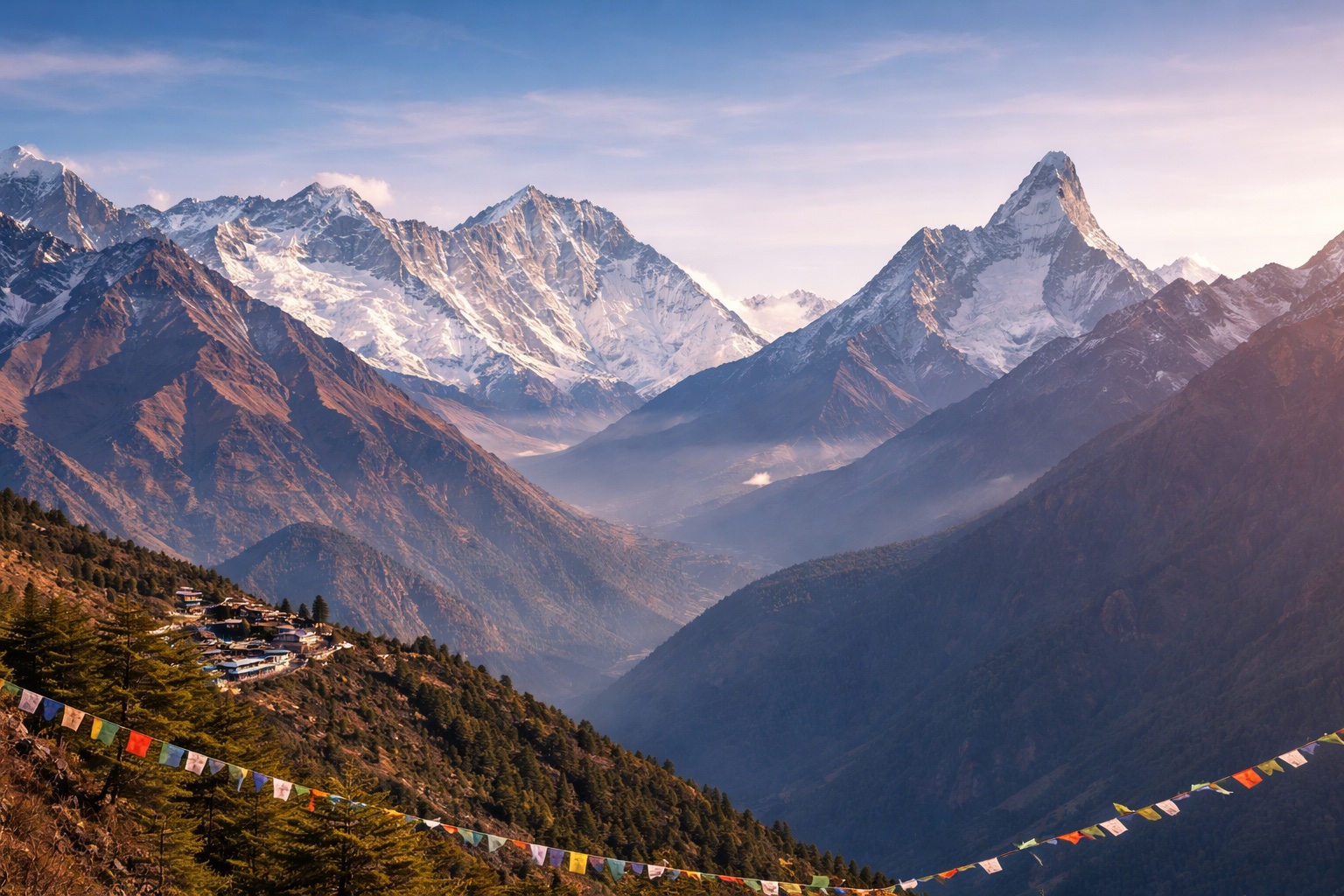
If you have already ticked off Everest or Annapurna Region trek (or not), you may be craving for something wilder and landed on these two remote trekkings, i.e. Kanchenjunga Circuit Trek and Makalu Circuit Trek. Both destinations sit in the far east side of Nepal, hugging the base of an 8,000m giant.
Both regions are perfect if you are into the remote side of Nepal, having a tiny fraction of the trekkers that Everest or Annapurna get in a single week. You may be confused thinking if both have the same features, which trekking stand out for me: Kanchenjunga or Makalu Circuit Trek? That's exactly what makes choosing between them so hard.
This guide breaks down Kanchenjunga Region vs Makalu Region covering key things like duration, permits, difficulty, altitude, cost, culture, and more, that make it easy for you to decide. This guide will simplify your queries and make you easy in picking the best remote trek in Nepal for your fitness, experience, and travel style.
Difference in shortest form:
Kanchenjunga Circuit is a long, high-altitude teahouse trek around the third-highest mountain in the world. It may be done by any fit, and well-prepared trekker with a good guide. While Makalu Circuit is a different animal entirely. It is a camping expedition that crosses three high passes over 5,800m (two of them over 6,100m), built for trekkers who have experience in trekking.
However, this alone may not be enough to choose the right trek for you. Read the full article to understand the differences and find the one that suits you best.
Quick Comparison: Kanchenjunga Circuit Trek vs Makalu Circuit Trek
|
Factor |
Kanchenjunga Circuit Trek |
Makalu Circuit Trek |
|
Duration |
18-24 days |
21-25 days |
|
Region |
Taplejung, far eastern Nepal (Sikkim/Tibet border) |
Sankhuwasabha, eastern Nepal (Everest-Makalu region) |
|
Starting Point |
Fly to Bhadrapur, drive to Taplejung |
Fly to Tumlingtar, drive to Num/Khandbari |
|
Highest Point |
5,143m (Pangpema, North Base Camp) / 5,160m (Oktang, South Base Camp) |
6,190 m (West Col), the trek also crosses Sherpani Col (6,180 m) |
|
Trail type |
Trekking trail, teahouse-based |
Trekking + technical terrain, fixed ropes/crampons on the passes |
|
Difficulty |
Strenuous |
Very Strenuous (technical) |
|
Permits |
Restricted Area Permit + Kanchenjunga Conservation Area Permit; min. 2 trekkers, licensed guide mandatory |
Makalu Barun National Park Permit + TIMS/local permit; guide with mountaineering experience strongly recommended |
|
Accommodation |
Teahouses/lodges throughout (very basic above Ghunsa) |
Teahouses till base camp, full camping above Makalu Base Camp |
|
Guide |
Mandatory (restricted area) |
Not legally "restricted," but effectively non-negotiable given the technical passes |
|
Crowds |
Very Low |
Extremely low (least trekked route) |
|
Cost |
Roughly US $2,400-$3,600 / pp |
Roughly US $3,500–$4,500+ / pp |
|
Best Season |
Mar-May, and Sep-Nov |
Mar-May, Sep-Nov (narrower weather windows for the passes) |
|
End Point |
Descends back through Taplejung |
Descends into the Khumbu, often finishing near Chhukhung/Lukla |
1. Duration: A Long Trek vs. An Even Longer Expedition
Neither of these is a two-week trek. The Kanchenjunga Circuit Trek typically runs 18 to 24 days. Duration varies following the transportation to and from Taplejung and time you choose to stay at both the North Base Camp (Pangpema) and South Base Camp (Oktang/Yalung). Shorter 10 days Kanchenjunga South Base Camp Trek and 14 days Kanchenjunga South Base Camp Trek versions exist if you only visit one base camp rather than doing a whole circuit.
Makalu Circuit Trek is an even longer trek that usually needs 21 to 25 days. Weather delays also can extra lengthen your trek. The trek covers three technical passes, so the itineraries should be built in extra acclimatization days. You simply can't rush a 6,000m glacier traverse, making your trip a little longer. Trekkers prioritizing shorter days often go for 19 days Makalu Base Camp Trek.
2. Accessibility
Both trails are part of the real adventure. For Kanchenjunga, you fly from Kathmandu to Bhadrapur, then take a long, scenic drive (or a shorter flight/drive combo via Ilam) up to Taplejung, where the trek begins.
For Makalu, you have to fly from Kathmandu to Tumlingtar, then drive to Num or Khandbari to start walking. Tumlingtar flights are weather-sensitive, similar to the more famous Lukla flight. Adding buffer days is highly recommended on both ends of your trip.
Both trekking destinations do not compromise on providing you the bestest view like some other famous routes in Nepal. However, at least one domestic flight plus several hours by road is one of the reasons why these treks stay so quiet.
3. Trekking Difficulty: Hard vs. Technical
The two treks are quite different when it comes to difficulty.
Just like any other trekking in Nepal, Kanchenjunga Circuit is slightly a hard trek with 6-9 hours of walking each day. The trail also includes steep climbs and descents, the Sele La Pass (around 4,480m), and long days at high altitude. You need to have good fitness and stamina, but it is still a standard trekking route with no ropes, crampons, or technical climbing.
Makalu Circuit becomes much more challenging than Kanchenjunga Circuit Trek. The route crosses Sherpani Col, West Col, and Amphu Labtsa, where you may need crampons and fixed ropes to cross glaciers, ice, and rocky terrain at very high altitudes. Previous high-altitude trekking or mountaineering experience is strongly recommended.
In short: Kanchenjunga is a hard trek, while Makalu can feel more like a climb. If you have not much experience, Kanchenjunga Circuit Trek should be the best option for you. If you have little experience and still want to trek Makalu, Makalu Base Camp Trek should be a better option than Manaslu Circuit Trek.
4. Maximum Altitude
The Kanchenjunga Circuit reaches around 5,143-5,160 m at the North and South Base Camps. The trek is similar to the altitude of Everest Base Camp and Kala Patthar. However, Kanchenjunga trek is considered more difficult due to its remoteness.
The Makalu Circuit goes much higher. Sherpani Col is around 6,180 m, while West Col reaches about 6,190 m. At these heights, the trek enters a serious high-altitude area, with greater risks from altitude sickness, extreme cold, and harsh weather.
In short: Kanchenjunga is high, but Makalu takes you into a much more extreme altitude zone.
5. Permits and Guide Requirements
Kanchenjunga is a Restricted Area, so you need a Restricted Area Permit (RAP) and Kanchenjunga Conservation Area Permit (KCAP). You can trek solo with a government-licensed guide through a registered agency. Since the trekking is situated in the restricted area, trekking alone without a guide is not allowed.
You’ll need the Makalu Barun National Park permit, Restricted Area Trekking Permit and Local area permit for Makalu Circuit Trekking. The permit can be changed following the itinerary, so it is very important to be clear with your agency. For the Sherpani Col-West Col-Amphu Labtsa section, you should have an experienced high-altitude guide, along with the necessary climbing gear and support crew.
In short: Kanchenjunga has strict permit rules, while Makalu requires additional technical support for the difficult sections.
6. Accommodation and Food
The Kanchenjunga Circuit is a teahouse trek from start to finish. The lodges are very basic with sharing rooms after you cross Ghunsa. Shared bathrooms, and meals like dal bhat, noodles, and soup are typical routine in high altitude. Electricity and Wi-Fi become limited or unavailable at higher altitudes.
On the other hand, Makalu Circuit has teahouses on the lower sections through the Arun Valley. Once you cross a Makalu Base Camp, it becomes a camping trek. There are no lodges on the high passes, so you’ll sleep in tents at places like Sherpani Col High Camp and Honku Glacier Camp. Our cook and kitchen crew prepare the meals, making the trek more complex and expensive, but camping is necessary for this remote and challenging section.
7. Landscapes and Mountain Views
The Kanchenjunga Circuit offers two very different sides of the mountain. The North Base Camp (Pangpema) has a wide, glacier-carved landscape. The route to South Base Camp (Oktang) passes through forests and offers views of Kanchenjunga (8,586m), Jannu, and other impressive peaks along the Nepal-Sikkim border.
The Makalu Circuit offers even more variety in one trek. You begin in the tropical forests of the Arun Valley, then climb through rhododendron forests and yak pastures to Makalu Base Camp. Beyond that, the landscape changes to glaciers and high passes, with views of Makalu, Chamlang, Baruntse, Lhotse, and Everest, before descending toward the Khumbu Valley. Few treks in Nepal offer such a dramatic change in landscape and altitude.
8. Remoteness and Crowds
Both treks are very remote, but Makalu is generally more isolated than Kanchenjunga. Kanchenjunga has a growing number of trekkers each year, while the full Makalu Circuit, especially the three high-pass crossing, remains much less traveled because of its technical terrain and camping requirements.
If you want a remote trek that is challenging but still manageable as a trek, Kanchenjunga is the better choice. If you want extreme solitude and are prepared for technical, mountaineering-style terrain, Makalu offers one of the most remote trekking experiences in Nepal.
9. Cost
The Kanchenjunga Circuit typically costs around US$2,100-$3,600 per person, depending on the group size, itinerary, and whether you visit one or both base camps.
The full Makalu Circuit is more expensive, usually around US$3,500-$4,500+. The higher cost comes from the camping logistics, technical equipment, larger support crew, and longer, more weather-dependent itinerary.
If you only trek to Makalu Base Camp without crossing the high passes, the cost is much lower (around US$1,800-$2,400). This version is also mainly teahouse-based and is closer in price to the Kanchenjunga trek.
In short: Kanchenjunga is more affordable, while the full Makalu Circuit costs more because of its technical and remote sections.
10. Physical Preparation
If you are planning to trek Kanchenjunga Circuit, you need to prepare your body like you would for any demanding high-altitude trek. Build your fitness over several months with long hikes, hill or stair training, cardio, and practice to hike carrying a loaded backpack. You should be comfortable walking 6-9 hours a day in order to be prepared for the trek.
For the Makalu Circuit trek, fitness alone isn’t enough. You also need technical skills, including walking in crampons and basic rope work. Previous experience with high-altitude trekking is highly recommended for this trek.
In short: Kanchenjunga requires strong fitness, while Makalu requires both strong fitness and technical mountain experience.
11. Safety and Altitude Challenges
Both treks have real altitude risks and are far from easy access to rescue services, so travel insurance with high-altitude helicopter evacuation coverage is essential.
Kanchenjunga has high-altitude risks, especially altitude sickness. Proper acclimatization, and a guide who understands altitude sickness can help reduce these risks.
Makalu carries additional risks because of its technical sections. You need to trek through three high passes involving glaciers, crevasses, and steep terrain. An experienced guide and proper support team is especially important in this trek.
In short: Kanchenjunga mainly challenges you with altitude, while Makalu circuit trek adds technical mountain risks on top of it.
12. Overall Experience
If you have read everything in this article, choosing your trek must be easier.
Choose Kanchenjunga Circuit if you want a long, remote, high-altitude trek that tests your endurance without requiring technical climbing skills. This trek is alternative to Everest Base Camp, Annapurna Circuit or Manaslu, with fewer crowds and a more adventurous feel.
Choose the Makalu Circuit if you want a similar remote trek with more technical adventure. With glacier crossings, three major high passes, and landscapes ranging from jungle to ice, it feels more like a mountaineering expedition. However, it requires better technical skills, preparation, and a higher budget.
Kanchenjunga Circuit Trek: Who Is It Best For?
The Kanchenjunga Circuit is ideal for trekkers who:
- Have completed challenging routes (EBC / ABC), as well as those with little trekking experience but excellent physical fitness and stamina.
- Want something more remote than a famous trekking route.
- Want a less-crowded trek without needing technical climbing skills.
- Are comfortable with basic teahouses and simple meals for 2-3 weeks.
- Want to experience both North and South Base Camps of an 8,000m mountain.
- Have good fitness and can handle long days of trekking at high altitude.
Makalu Circuit: Who Is It Best For?
The Makalu Circuit is better suited to trekkers who:
- Have experience with high altitude trekkings, high passes, crampons, fixed ropes, or glacier travel.
- Want one of the most remote and least-traveled trekking routes in Nepal.
- Are comfortable with extended camping and basic facilities for 15-20+ days.
- Have a flexible schedule for acclimatization and possible weather delays.
- Want a trek that can help in future mountaineering adventures.
In short: Kanchenjunga is for experienced trekkers seeking remoteness, while Makalu is for experienced trekkers looking for a more technical, expedition-style challenge.
Frequently Asked Questions
Q1. Which is harder, the Kanchenjunga Circuit or the Makalu Circuit?
A: The Makalu Circuit Trek is harder. The route is already challenging up to Makalu Base Camp, but beyond that it involves glaciers, high passes, fixed ropes, and crampons, making it much closer to a mountaineering expedition.
Q2. Can beginners do Kanchenjunga Circuit or Makalu Circuit trek?
A: Both treks are considered challenging high-altitude treks and require good fitness and preparation. Kanchenjunga circuit trek can be suitable for a well-prepared trekker with strong physical fitness, even without a trekking experience. However, you require previous trekking experience with technical mountain terrain for the Makalu Circuit Trek.
Q3. Do I need a guide for the Kanchenjunga or Makalu Circuit?
A: Yes, a guide is required for both trekking routes. Kanchenjunga is a Restricted Area and requires a licensed guide arranged through a registered trekking agency. The full Makalu Circuit also requires an experienced guide, especially for the technical high-pass sections.
Q4. What is the maximum altitude on each trek?
A: Kanchenjunga Circuit Trek reaches around 5,143-5,160m at the North or South Base Camp. The Makalu Circuit reaches around 6,190m at West Col, with Sherpani Col at approximately 6,180m.
Q5. Which trek is more remote and less crowded?
A: Both are among more remote trekking routes in Nepal. However, the full Makalu Circuit trek is generally quieter, especially the three-pass section. The technical terrain and challenging logistics of Makalu circuit trek makes the destination more remote.
Q6. How much does each trek cost?
A: The Kanchenjunga Circuit generally costs around US$2,100-$3,600 per person. The full Makalu Circuit usually costs around US$3,500-$4,500+ because of camping, technical equipment, support staff, and additional logistics.
Q7. Is the Makalu Circuit Trek the same as the Makalu Base Camp Trek?
A: No. The Makalu Base Camp Trek ends at Makalu Base Camp and is mainly a teahouse trek. The Makalu Circuit continues beyond Base Camp and crosses Sherpani Col, West Col, and Amphu Labtsa before reaching the Khumbu Valley. It is a longer, more technical, and largely camping-based trek.
Q8. What is the best season to trek Kanchenjunga or Makalu?
A: The best seasons for both are Spring (March-May) and Autumn (September-November). For Makalu, the high passes can be more weather-sensitive, so extra days are often needed in case conditions are unsafe for crossing.